About Me

My photo
Pilgrim, priest and ponderer. European living in North East England. Retired parish priest, theological educator, cathedral precentor and dean.
Showing posts with label faith. Show all posts

Tuesday, 24 March 2020

Images of Calm in Anxious Times

The tenth day of going Lazaretto (in self-isolation) and the first of lockdown. It’s a strange existence for all of us and a worrying one. I’ve been aware of the anxiety I’ve felt in the face of Covid19’s relentless advance. The fact that this threat is silent and invisible adds to the unease. When the Prime Minister spoke to the nation last night about what lockdown must mean, I wondered whether this is what it felt like on the morning of 3 September 1939 when another PM told Britain that she was now at war.

I guess my response was much the same as yours. I thought of the people - so many of them, young as well as old - whom the virus has touched and made sick, mortally so for some. I thought about the courageous men and women on the frontline of health care who are facing impossible life-and-death decisions about where to allocate resources and seem inadequately protected themselves. I thought about the countless people whose finances, livelihoods and homes have suddenly become immensely precarious. I thought about our own locality, our neighbours in this agreeably ordinary village community. I thought of our friends in other parts of the world and here in Britain. I thought of our family, our grandchildren who can barely comprehend what is happening to them, and whom we may not see for months. And yes, of course I thought of ourselves too, quarantined in our home, so lucky to be safe and well (so far), and provided for and with each other to support and love.

It’s hard not to be troubled by turbulent thoughts. The virus extends a force-field over all of us. We are caught up in a kind of psychic instability. Maybe I’m just a natural worrier. I find it easy to imagine, no, expect, the worst. ‘What if...’ this happens, or that, or a thousand other possibilities? Anxious times feed such Puddleglum reveries. Almost all of them are fantasies that take me nowhere except deeper into the slough of despond. Or they are imagined threats I can do nothing to mitigate, tomorrow’s bridges there’s no point in trying to cross today. And the longer we have in lockdown, the more time there is to fill with morbidity.


There’s a spiritual task here. It’s about quietening the spirit, cultivating equanimity, nurturing a more even temperament. As the well-known text Desiderata has it, that adorns many a living-room wall, ‘Go placidly amid the noise and the haste, and remember what peace there may be in silence.... Nurture strength of spirit to shield you in sudden misfortune. But do not distress yourself with dark imaginings. Many fears are born of fatigue and loneliness. Beyond a wholesome discipline, be gentle with yourself....’ Which is not far away from the wisdom writers’ encouragement to live not out of fear but out of trust, echoed in Jesus’ words in the Sermon on the Mount: ‘Do not worry about your life’ (Matthew 6.25-33). Living trustfully is a key insight of the scriptures.

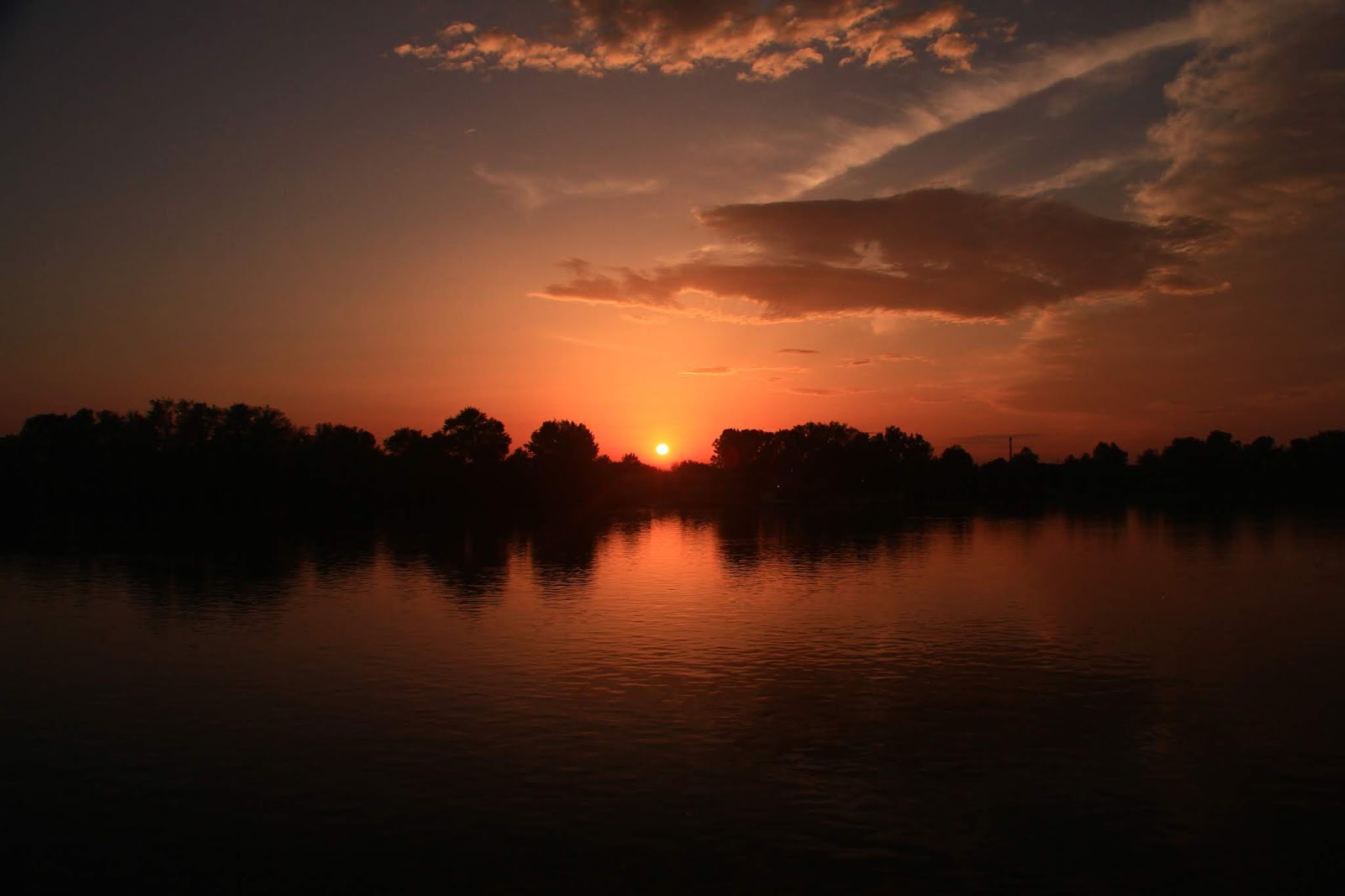
All my life I’ve found solace in music and art and they are great travelling companions through these febrile times. As is photography. When we first decided to go Lazaretto, I began to sift through my catalogue of photographs looking for images that might provide a focus for meditation. And then I thought: why not share some of them online? So I began to put some favourites on social media (Twitter and FaceBook), just one image each day using the hashtag #ImagesOfCalm. A bit corny, I know, but I couldn’t think of a better one. I’m delighted that a few others are now doing the same. I can promise that I have more than enough photographs to see us through at least twelve weeks of self-isolation.

You’d expect images of nature to feature. There’s something reassuring about landscapes, skies, water, trees, flowers, animals and birds. As you’re drawn inside an image of the natural world, you’re reminded that you belong to the created order, that the good earth is your home, and you’re helped to rediscover your place in the scheme of things. Walking in our peaceful Northumberland valley has been both calming and poignant this March. Daffodils and blackthorn blossom, new-born lambs and birdsong all remind us that with or without us, springtime is as fresh and abundant as ever.

Other images feature human creativity. Buildings, sculpture and paintings play a large part in my own imaginative life, so expect to see some of these in my choice of photographs. I believe there’s a special place for still life. This image (taken at Washington Old Hall) suggested itself for the simplicity of its forms and the
quietness of its colouring. The pewter candlestick and ewer are beautiful objects in themselves. But I liked the way they are lit against the curtain and the window, a light-and-shadow chiaroscuro that is so suggestive of these times we are experiencing. And faith can perhaps see in the ewer the implication of life-giving water, and in the candle, the light of grace and truth.

Some images may be more intriguing, perhaps disturbing. Take today’s photo on the left. I was in a cafe on a bleak day in the Port of Blyth and saw this table and chairs on the deck outside the window. It could not have conveyed a more forlorn scene, reinforced by low contrast in a dull even light. Few of my photos have unnerved me more than this one with its hint the surreal, even the dystopian. I wondered whether to post it this morning. Yet this empty table seemed to fit this first dislocated day of lockdown, representing our enforced abandonment of social life, laughter and the love of friends. Undeniably calm, it’s true, but it’s the ‘dead calm’ so well described by Tennyson in In Memoriam, his elegy for the friend he had lost: ‘And in my heart, if calm at all, / If any calm, a calm despair’.

Yet I also found a more promising ‘calm’ in what I saw. As I gazed at it, the furniture seemed to issue an invitation, or at least the possibility of one. For now, they were in a dormant state, tidily and symmetrically stowed on the decking to provide material for photographers like me. But, I thought, it would not be long before they would be peopled again. Like the wintry trees in another image I shared, it was only a matter of time before the scene would be brought back to life, animated by living, breathing people sitting at the table and enjoying the food and drink placed on it. An obvious allusion to the eucharist, of course, the celebration we are denied for now while our churches are closed for worship, but which remains at the heart of the spiritual life for all who follow Jesus.

Finally, I'm including more explicit images associated with faith. You'd expect that from a God-botherer like me, whose understanding of things has been shaped by Christianity all my adult life. On St Cuthbert's Day I posted a distant view of Durham Cathedral, his shrine, with a contemporary interpretation of an Irish high cross in the foreground. On Mothering Sunday I shared a perspective of Joseph Pyrz's Annunciation sculpture of Blessed Mary the Virgin in the Galilee Chapel of the Cathedral. I've long believed that photography can open up perspectives on faith and the spiritual life in ways that can surprise and enchant us. I don’t think I’d realised how potent a tool it can be until now.

So I'd like to think that these 'images of calm' could reassure and strengthen us when things are fragile and we are living through times of risk and danger. 'Go placidly...' I hope too that they may in turn put their questions to us, and encourage us to look again at the assumptions on which we base our lives and how we face a crisis. And maybe, just maybe, they could challenge us to try to live more authentically not least in reaching out to and helping those who need support and care so much.

Tuesday, 10 March 2020

Abroad Thoughts from Home: on not travelling

It’s a dull, wet day here in Tynedale. Nothing unusual in that: the weather has been unspeakable for weeks. But today we should have been driving off the Newcastle-Amsterdam ferry and heading south into Germany and France.

The plan was to drive up the Rhine to a village near Strasbourg. I was due to give addresses there at a weekend conference for church people from the Anglican Diocese in Europe. On the way we had planned to stay in Düsseldorf. This was where my Jewish mother was born and brought up until, at the age of fourteen, she was sent to Britain to escape the Nazi persecution. We'd arranged to meet the head teacher of her old school and some of his current students. He has taken a great interest in Jewish children who had attended it before the war, making contact with survivors (my mother was one of the few) and helping today’s young people understand the terrible history of Germany under the Third Reich.

After the conference, we were going to linger for a few days in Alsace, one of our favourite regions of France. That too is an area with long memories for me. In my gap year (we didn’t call it that in the 1960s), I worked for a few months on a pig farm at Pfaffenhoffen, a village north of Strasbourg. I grew to love Alsace and its culture, positioned as it is at a crossroads of Europe by the Rhine where French and German identity, language and culture meet. And at the end of our tour, we had booked to stay a night at Edam in the Netherlands (where the cheese comes from) where my grandparents were kept safe underground for two years by two evangelical Christian sisters who saw it as their vocation to shelter Jews during the Nazi occupation.

But we’re not on the autobahn where we should have been today. It’s the virus of course. Last Friday I was talking on the phone to my GP about the medication I’m on. It’s relevant to this story that a few years ago I had a silent heart attack which was only discovered during an MRI scan later on. I was already on medication for atrial fibrillation and hypertension. ‘Too much information’ you cry! Point taken. That’s all you need to know.

‘By the way’, I asked my doctor, ‘what about travelling abroad with Covid19 spreading across the continent?’ He spelled out the risks: not travel per se, but being in close proximity to people you don’t know in ships and hotels and conference centres. It’s not only the risk they pose to you, but yours to them. Any of us could be carrying the virus without knowing it. Only 20% of those who catch it will develop severe symptoms. Of those, a few percent will die. You could be one of the unlucky ones, he went on. You are nearly 70. You have an ‘underlying health condition’. You are male. You tick all three ‘higher risk’ boxes.

‘Ok’, I replied, ‘I know you’re not telling me whether to travel or not, but giving me the information I need in order to make a sensible decision. But perhaps you can answer this: what would you do in my situation?’ He paused, then said: ‘In your position, I would not travel. Maybe you’d be fine. You probably would. But I don’t think any of us should travel just now unless it’s essential. I’m surprised that the FCO website is as relaxed as it is about overseas travel. And if you found yourself quarantined while you were away, you’d say to yourselves that this ordeal was avoidable. Far better, if it comes to it, to be quarantined in your own home’. Or words to that effect.

I’ve often found that to ask someone, ‘what would you do in my situation?’ can open the door to a really helpful conversation. The other person – priest, financial advisor, counsellor, GP, spouse or friend - isn’t doing my work for me. In adulthood, other people can’t and shouldn’t make decisions for us. Not if we are in our right mind, and competent to be led by the evidence, weigh it up and come to a view about what we should do. But to ask ‘what would you do?’ does allow my conversation partner to be candid. I’ve often said to others who’ve sought my advice: ‘I can’t make this decision for you. But given what you’ve told me, I can suggest how I’d respond if I were in your shoes’. My GP was willing to do that. I needed to hear what he had to say. But the decision not to travel was ours, and ours alone.

Today, when we should have been on the road, it’s inevitable that I ask myself whether we did the right thing. It all comes down to risk. Did we do the risk analysis well? Was our appetite for risk unduly cautious? On the other hand, had we crossed the North Sea after all, might we now be asking if this was a reckless adventure we shouldn’t have embarked on? I’ve since learned that the Land or province of Nordrein-Westfalen which includes Düsseldorf is where most of Germany’s cases of the virus have been reported.

As I wrote in my last blog there is a virus that is more contagious than Covid19. It’s the fear and anxiety that it’s generating. One professional I’ve heard speak about it, a senior epidemiologist, says that Covid19 poses the gravest global threat through disease since the Spanish flu of 1918 that killed so many millions. This coronavirus is not as deadly as, say, Ebola, but crucially, it is far more infectious. The combination of high probability of contagion with serious impacts on more vulnerable sections of the population raises the risk level significantly. Enough to make it essential that we change our behaviours to mitigate the risk.

Our travel dilemma is a case-study of how we are all being faced with new and difficult choices thanks to the virus. They involve changes of thought, habit and behaviour. Handwashing and hygiene, not kissing or shaking hands – these are straightforward enough. Trickier are choices that involve our daily work, our education, our family and social lives, our holiday plans. Wherever people gather - schools, sports and leisure venues, pubs, restaurants, businesses, shops, theatres, cinemas, churches, airports and railway stations – all are having to negotiate territory that is unfamiliar and unwelcome. They have to make choices about how to manage in these coming weeks and months, aware that there are big economic and social consequences at stake. We have to decide what kind of engagement with them will be low-risk and safe, and where we need to be more cautious. It’s a kind of exile, a strange land where ordinary rules of engagement are suspended. (‘Exile’ was to have been the theme of my Bible studies at the church conference – how much material there suddenly is to reflect on!)

As for me, I’m hugely disappointed not to be travelling today. Yet relieved, too, that we don’t have to. Our children certainly feel that way. It’s a conflicted place to be. Only hindsight will reassure us about our decision, or not, as the case may be. We tried to act for the best. But life is lived not in the crystal-clarity of black-and-white but in ambiguity, among a million shades of grey. Faith becomes a real factor when you have to weigh up risks. As does courage, whatever path we opt to tread. ‘Face the fear and do it anyway’: the fear of doing something or of not doing it. These are early days in the story of the virus. There will be many more decisions we shall need to face in the future, and some of them will be painful and hard.

That’s where prayer, wisdom and God-given discernment come into things. There’s spiritual work to do at times like these. The virus sends us back to the foundations of our faith and what it is that gives us our dignity as men and women. And where we believe God is found at the core of seems to be dangerous and frightening. 'Do not worry about tomorrow' says Jesus in the Sermon on the Mount. I try not to, though temperamentally I find it's one of the hardest challenges of the gospel. Cultivating wisdom, learning to take the long view, finding hope where I can, and above all, living contentedly, thankful for the goodness of God - these I've found to be the most important strategies for mitigating risk at an inward level, facing it with equanimity and becoming, God willing, a better human being as a result.


Saturday, 18 January 2020

Haunted by the Holocaust, Haunted by Hope

This month marks the seventy-fifth anniversary of the liberation of Auschwitz on 27 January 1945. Holocaust Memorial Day is always a solemn occasion to make us stop and think. This year, perhaps, especially.

I was born a mere five years later. My father was a Londoner and my mother was from Düsseldorf in the German Rhineland, the second child of assimilated middle-class Jewish parents. She had been sent to England as a teenager in 1937 when the fate of Jews in Nazi Germany had become clear. She became a nurse and married my father after the war. The year I was born, her mother, my grandmother, followed her and settled in this country. She and my grandfather had fled for safety to the Netherlands after the outbreak of war. With the German occupation they were hidden underground and looked after by a pair of Dutch Christian women. My grandfather died shortly after liberation, but my grandmother, "Omummy", lived to a great age, it was said till she was 95 though no-one was quite sure.

In my early childhood we spoke German at home as well as English. I'm told my German had a pronounced Rhineland-Westphalia accent, for Omummy was from Cologne. She sang Schubert Lieder to me, and I began to pick out some of his simpler songs on the piano. Heidenröslein was one of them - a sweet little setting of a Goethe poem about unrequited love, how a beautiful flower, a rose, draws the blood of her admiring lover. Erlkönig was another, beyond my capacity of course to make sense of the furious piano part except the hammering octaves that picture a father's desperate ride as he tries to save his child from a delirious encounter with the dreaded "Elf-King". Goethe again.

That Romantic fusion of love, pain and death. I knew it in music before I understood that it was part of my own family history. Sensibly, my parents did not trouble us young children with the traumas of the recent past. My eyes began to be opened when I went to school in 1955. At first, when my mother came to collect me at the school gate, we would speak easily in both German and English. But soon, very soon indeed, I sensed that it wouldn’t do in postwar London to speak German in public. I don’t think anything was ever said, but I distinctly felt as children do, an atmosphere, odd looks, a coolness in the air. I dropped speaking German like a stone. And although I always understood it when my mother and grandmother were talking to each other, I only ever responded in English. Later on I was seduced by classical culture and Romance languages, and heartily wished that my pedigree had been part-French rather than part-German.

It was Christianity that first awoke the sense that my family origins mattered. As a chorister I would sing the Psalms and hear the scriptures read and preached about. As a teenager in the school Christian Union, I immersed myself in the Bible, learned to love it, and found myself amazed that for so long I had been ignorant of this semitic world in which Hebrew monotheism had been forged and in which Christianity had burst upon the world and taken shape. And into which I myself had been born! This story was mine! That moment of recognition came with the force of a real and life-changing disclosure. My Jewish identity (a legal fact in Rabbinic law, since my mother was Jewish) had become not just a matter of historical origin but of lived experience that made a difference to who and what I was as a person.

I began to read about the rise of the Nazis, the growth of antisemitism, the death camps. It was shocking to learn that members of my grandmother’s family, my family, had been deported to Auschwitz. It dawned on me that my grandmother and mother were extremely lucky to be alive, for given the survival rate of Jewish people brought up in Hitler’s Germany, they would have been expected to perish. Were it not for my grandparents’ foresight and the welcome given to German-Jewish refugees by the British government, I would not be here myself. Later I began to understand the ordeals of Holocaust survivors, not only during the Nazi era but since. And my own conflicts and struggles as a “second generation” survivor. As with all forms of cruelty and abuse, the effects are lifelong. You are always a survivor, even in the best and happiest of times.

********

Which is why Holocaust Memorial Day is a time when I want to revisit the past and try to understand. “Never again” is a fine aspiration, and an important one. But post-war history shows that even the so-called civilised world is far from owning it. The United Nations Convention of 1948 defines genocide as “acts committed with intent to destroy, in whole or in part, a national, ethnic, racial or religious group, as such”. Bosnia, Rwanda, Cambodia and Darfur are just a few of the names that haunt us from well-remembered decades when we saw the images on TV and in our newspapers and were powerless to do anything other than support victims in the aftermath of massacres of innocents. 

I used the phrase haunt us deliberately. I’m aware that as I grow older, I am more and more haunted by the genocide that is imprinted on my own family memory. It’s not my direct experience, thank God. But it feels as though it has become part of my personal take on things. It has given me a world view that is inevitably coloured by dark memories that function “as if” they were my own. I’m struggling to put this into words, to describe why its legacy in me is a profound pessimism about the ability, to say nothing of the collective will of humanity to save itself from instincts and drives that, unchecked, will inevitably destroy us. I recently read a vivid account of a field surgeon who had worked in theatres of conflict such as the Congo and Syria. The capacity in human beings to be cruel seems beyond belief. But it is real and it is terrifying. You only have to look at the images of photographer Don McCullin to see that. It doesn’t take much to inculcate a sense of both helplessness and hopelessness.

So haunted as I am, do I contemplate Holocaust Memorial Day with despair? It would be easy to be gloomy about this year’s seventy-fifth anniversary falling just four days before Brexit Day. The European Union stands as a project fundamentally designed after the last war to safeguard peace in a continent that had been bitterly fought over for centuries. “Never again!” What sense does it make in an increasingly fraught global environment to walk away from such a collaboration of nations and peoples? That remains my question, and I shall always believe, I think, that this is the biggest historical mistake my country has made in my entire lifetime.

Nevertheless, I must not give in to despair. By God’s grace I will not give in to it. Keeping hope alive seems to me to be one of the greatest gifts we human beings can offer one another as so many stories from the death camps testify. People often say to us God-botherers, “You’re so lucky to have faith. I wish I did”. The implication is that we expect God somehow to intervene, deliver us from times of trial, make things all right again. I tried to explain in my last blog why I don’t believe that any more. Religion can’t resort to magical thinking. Faith must “come of age”. There is no deus ex machina to rescue us from war, genocide, natural disaster or the climate emergency.

But I do believe that faith has the capacity to inspire and energise us to bring about personal transformation that makes a difference in the places in which we live and struggle and suffer, the worlds where we find ourselves to be desperate and afraid. At least, this is what I found when I turned to Christianity as a teenager and recognised myself as a child of Abraham. As I approach my eighth decade, that faith continues to sustain me. It binds me to people in every place who stand for truth against the lie. It affirms my solidarity with those across the world who care about justice, reconciliation and the healing of memories. It strengthens my will to stand alongside victims, not least in my own community who have found themselves at the receiving end of racism, sexual abuse, homophobic attacks and other hate crimes. And of course the antisemitism whose revival holds real and sinister echoes of Europe in the 1930s and the horrors it led to.

When you grow old, you’re increasingly aware that your journey is leading you towards an unknown region. Like Abraham, indeed, in all his perplexity, in all that he did not, could not, know. In him, says Genesis, all the world will find blessing. Does blessing happen as we begin to shed self-interest, travel more lightly, learn to look beyond ourselves? Is that how tragedy begins to purify our vision and despair is turned round? Is that how hope begins to be born? Is that how our longing for a better future for humanity begins to be shaped and to lead to action that could change the world?

I won’t answer these questions in my lifetime. But the story of Abraham and yes!, the anniversary of the liberation of Auschwitz point the way, offer a glimpse of what is life-affirming and good, reassure me that there is no shadow so dark that it cannot be penetrated by Light and Love. These are the gifts of the Christ Child that we celebrate in this season of Epiphany. They are life-giving, joyous and empowering. And that means I'm not only haunted by the Holocaust. I'm just as haunted by hope. Because it will not let me go.

Wednesday, 26 December 2018

Something The Queen Said: Thoughts on Christmas Faith and Life

As I listened to The Queen on Christmas Day, a couple of sentences stood out for me. The Christmas story retains its appeal since it doesn’t provide theoretical explanations for the puzzles of life. Instead it’s about the birth of a child and the hope that birth two thousand years ago brought to the world.

In old age, Her Majesty has been increasingly clear with us all about the central place Christianity occupies in her life. It’s heartening to hear her speak about the power her Christian faith has had throughout her long life to motivate, inspire and give meaning. 

But this statement I’ve highlighted goes beyond personal testimony to offer a really important insight about how religious faith does and doesn’t function in human life. The temptation is to look to faith to explain things, probe the complex mysteries of existence, come up with answers to all that baffles and bewilders us in our human experience. 

Once upon a time we spoke of a “God of the gaps”, the deity whose existence provided accounts of phenomena that had so far eluded human explanation. Literal readings of the Bible provided ready resources for explaining the nature of the cosmos, the origins of life, the phenomenon of humanity, and the fact of suffering and pain. For many people, they still do, as we can see in the conservative evangelical right of North America for whom the scriptures provide the infallible answer to every question posed by science, ethics and faith.

The urge to explain extended to the arguments for the existence of God himself. I was taught philosophy at Oxford by Anthony Kenny who later became Master of Balliol which was my college. Kenny had trained and practised as a catholic priest but left the priesthood on account of his questioning the intellectual basis of dogmatic religion. His lectures on the arguments for the existence of God comprehensively dismantled one by one the philosophical bases of the classical “Five Ways”. Yet he was careful to say that this didn’t mean that God did not exist. You could no more prove his non-existence than his existence. Whatever affirmation you made about God essentially came down to faith, not logic or evidence. To speak of “explanation”, you could say, was to commit a “category mistake”. Rational explanation and religious faith belong to different “language games”.

I’ve spent a lifetime getting to know the wisdom literature of the Hebrew Bible. I’ve taught it to theology students and preached it to Sunday morning congregations. Above all, I’ve found that it’s immeasurably enriched my personal understanding of faith and the human condition. I’ve learned how agnostic books like Job and Ecclesiastes are when it comes to explaining the riddles of the world and of my own self. Whereas conventional religion likes binaries and causal explanations: right and wrong, good and evil, light and dark, reward and punishment, these writings probe deeper beneath the surface of things. They seem to discern that complexity will not be reduced to a simplistic “yes” or “no”. On the contrary. It takes faith to live with the reality of suffering (Job) or with a sense of ennui or meaninglessness (Ecclesiastes). These texts do not offer “solutions”, “theoretical explanations for the puzzles of life” to quote Her Majesty. It’s faith, not rational thought, that enables us to live with these great unanswered questions. “The fear of the Lord, that is wisdom” says Job.

Theologians calls the exploration of faith in the light of the problems of suffering and meaning theodicy. Theodicy can’t offer watertight explanations, and doesn’t try - at least, not any more. What it does is to explore ways in which faith can be understood and presented intelligently in precisely the kind of world we all know we live in, full of paradox and contradiction. This is necessary because for many, it’s questions of suffering and meaning that are a major obstacle to belief. “How can a God of love exist in a world that is so cruel and pain-ridden?” We aren’t being true to our own faith if we don’t feel the force of this question. Theodicy can help sensitise our faith to such questioning, help us articulate it in ways that place suffering and questions about meaning at the centre where they belong, rather than at the margins. 

Christmas gives us a glimpse of this way of believing. We hear afresh the story of the Holy Child of Bethlehem, we sing carols of love and praise, we gaze with wonder into his crib and are perhaps surprised to find ourselves profoundly moved by this image of a birth that brings such a joy and such a hope. This is to say that the the instinct of Christmas faith is contemplative. We look as if through an open door into a world that for a brief moment grants a vision of what life could become. We find ourselves gazing on a transformed world and a transfigured life. “Peace on earth, good will to all people!” we sing in tune with the angels. If only it were true! we say longingly to ourselves. 

The Christmas story itself embraces this longing for a world healed of its wrongs. “No room at the inn” speaks of exclusion and hardship. The flight into Egypt presents the Holy Family as exiles seeking asylum in a strange land. Herod’s massacre of the innocent children depicts the suffering of innocent victims in the most terrible way possible. “The holly bears a berry as red as any blood”, indeed. Theodicy is at the very heart of our Christmas story and the carols we love to sing.

And yet contemplative faith intuits that the greatest mystery in the universe is not suffering but love. It’s love that defies all explanation, other than that this is simply how God is in himself. This is what we understand in a life-changing way is the deepest truth of Christmas. St Francis understood this, which is why he set up the first Christmas Crib and invited people to bring to it their heart’s love. Christmas becomes real for each of us as we give ourselves to this rapturous vision, and it becomes real for our world, by anticipation, as we each live out the hope that is set before us in ways that make a difference to the lives of others, whether it’s in politics, peace-making or the pursuit of social justice. As the medieval spiritual guides understood so well, holy contemplation always leads to good action. And that’s what changes things. 

The traditional Gospel reading on Christmas Day says it all. “And we beheld his glory, glory as of the only-begotten of the Father, full of grace and truth” (John 1.14). We beheld. This is what the Incarnation invites us to do: to look, to see, to behold. For as we gaze into the face of the Love that makes its dwelling among us, as we are drawn into the grace and truth we see there, we instinctively understand that here is the source of all that is life-changing. Those sterile causal explanations we once hankered after don’t belong here, have no relevance to this vision of God. The Queen was right about that. What matters is leaning to become contemplatively wise, discovering how this way of life becomes a source of inspiration and strength as we try to do God’s work in the world.

When religious faith comes of age and renounces its need to explain, turns instead to contemplation, and then acts on what it has glimpsed, it achieves a state of wisdom which is both life-changing and brings hope to the world.

Monday, 24 September 2018

Brexit, Mountain Madness and Waiting for Angels

There's a lot of "magical thinking" around at the moment. The clock is ticking ominously towards Brexit-Day next March. The Prime Minister clings stubbornly on to her Chequers plan which politicians of all hues, not to mention EU leaders tell her has little hope of flying. Canada and Norway are back in the frame as possible Brexit models. There's talk about how a no-deal Brexit could do the nation a power of good. So much busking, so little planning, still no clarity - it isn’t looking good.  When was a modern nation as confused as this, as exposed to European ridicule, as diminished in its standing on the world stage? It's sad to watch any country agonise like this. It's tragic when it's your own.

Much of the Remain perspective on Brexit draws on metaphors of height. "Falling off a cliff edge" is a favourite. "Staring into the abyss" is another. To me, the government’s confusion is redolent of mountain madness. Above a certain height (is it 7000 metres?), your capacity to think clearly and make sound decisions is significantly lessened, which is why climbers die as a result of poor judgment. Your ability to calibrate risk, assess the weather conditions and the passing of time (how much daylight have you got left?), your physical and mental condition, your stamina levels can become dangerously skewed. Not to mention your ethical judgment when it comes to helping others who have got into trouble in high places. How many mountaineers have died because they didn't recognise the moment when they should and could have turned back?

A chance encounter on social media today got me thinking about this image of surviving at a dangerous height.  In H.G. Wells' famous short story, a traveller finds himself in a secret, enclosed mountainous land where because of some inherited genetic condition, everyone is blind. Ah, he tells himself, "in the country of the blind, the one-eyed man is king". It proves otherwise. He attempts to escape by climbing his way out of this kingdom where no-one can see except him. But the heights are fraught with danger and he doesn't have the equipment or the skill to scale them safely. He falls to his death. That seems like an eloquent image of our political leaders struggling to keep their heads clear when they are well above their safety zone, where the Brexit air is too thin and conditions too treacherous for them to keep their footing.

One image from the Bible stood out as I thought about it all today. It's the well-known story of Jesus' temptations. Two of them are about high places, as it happens, but here's the one that struck me forcibly.

Then the devil took Jesus to the holy city and placed him on the pinnacle of the temple, saying to him, 'if you are the Son of God, throw yourself down; for it is written, "He will command his angels concerning you", and "On their hands they will bear you up, so that you will not dash your foot against a stone."' 

Many people who are not in the least suicidal report that same irrational pull towards danger-at-a-height. They feel some strange, unaccountable instinct to do precisely what Jesus is tempted to do, throw themselves off. It's as if there is something enticing about the cliff-edge or mountain-top, the tower of a great building, a parapet of high bridge, the rim of some chasm in the ground. We can be seduced into thinking we are safer than we are. "Our interest's in the dangerous edge of things" says Robert Browning in one of his greatest poems, "Bishop Blougram's Apology". I sometimes wonder whether our leaders are increasingly finding themselves in this fraught terrain.

What strikes me in the gospels' temptation story is how uncannily accurate the devil is when he suggests what Jesus might do. "Throw yourself off, because you know the angels will come and rescue you." Really? How can he possibly know that, whether he is the Son of God or not? It's an absurd temptation, and yet Jesus takes it seriously. Is this because he knows himself, knows his demons (so to speak), knows that the absurd is exactly what so many of us find ourselves doing when we lose our ability to think clearly? Knows that blind faith is never reasonable, never makes any sense, despite the specious appeal that irrationalism of every kind always holds out for a life that is happy and painless and filled with certainty, and trouble-free.

That's to speculate, of course. But there's no speculation about how Jesus sees off this temptation to do what makes no sense. He focuses on where his own rationality and self-knowledge lead him, back to the God from whom he draws his identity and his sound mind. He answers the devil, 'Again it is written, "Do not put the Lord your God to the test."' In other words, let faith and trust in God be informed, not by idiocy or self-interest but by a reasoned discernment of what God requires of us. And if I read the gospels aright, among the ways God wants humanity to know him and serve him, thaumaturgy, overt dramatic displays of supernatural power are not among them. Rather, he wants us to be sound in mind so that as disciples ("learners"), we make good judgments about what is in our own interests, and even more important, what is in other people's. It's what the Bible calls wisdom.

I think there is a clear strain of irrationalism in a lot of the pro-Brexit rhetoric we are hearing. The increasing shrillness of it is evidence here - shout louder because the argument is weak. It's been abundantly clear from before the referendum that the EU as a rule-based organisation could not compromise its four freedoms, and that any credible Brexit proposal from the UK would have to honour them. Instead, there is still talk about unrealisable ways of managing the Northern Ireland border, some of them recklessly putting the Good Friday Agreement at risk. We were told during the referendum campaign that achieving trade deals with the EU would be straightforward when we knew that Canada's has taken a decade to be realised. No-one can tell us how this country is going to recruit people to the NHS, the hospitality and agricultural industries. Warnings against Brexit by those whose business it is to understand and manage the economy are contemptuously disregarded as fear-mongering. This wearisome litany could go on and on.

So I'm thinking: are our leaders perched on the high pinnacle of some building of the mind, an edifice they have imagined for themselves where the rules of real life don't apply, where they can step out into empty air and look forward to being rescued by the angels? Are they so locked into the Brexit group-think ("the will of the British people", "what's best for Britain", "no People's Vote") that they can no longer see the risks they are running? I think I can safely say that there is no angel waiting to bear us up, no divine intervention that will protect us from our own folly. Why should there be? The stones our nation may dash its feet against will be unforgiving and hard. God gives no command concerning us.

We are already on our own as a nation set on this course of action. Europe and the world don't owe Britain any favours. We have fewer friends abroad than we used have and that isn't likely to change soon - the hurt Brexit is inflicting on our partner EU nations will take a generation to heal as will the bafflement beyond Europe as to why the UK would want to walk away from hard-won alliances. Whatever judgment we make about Brexit, we are responsible for it and will have to bear the consequences not just for a few years but, if many are to be believed, for decades to come. And our children and grandchildren whose future we have robbed know all too well that they are the ones who will carry the sins of their fathers and mothers for much of their lives - sins not of Brexiters' bad intent (let's not judge motives here - no doubt they were sincere, they meant well and the idea was good) but of unreason and poor judgment.

So I call it mountain madness. I pray - but don't yet dare to hope - that we all get down to safer levels where we can breathe properly, see the hazards we've been facing, and think clearly again. Yes, of course nowhere in life is risk-free, but we shall be a lot better off where evidence and logic and realistic projection are leading us rather than up here among the perilously tempting eternal snows where the view may be magnificent but the dangers are very great. Even a small slip could cost us our lives. Better get back down while there's some daylight left. It's late in the day, but not too late - yet.