About Me

My photo
Pilgrim, priest and ponderer. European living in North East England. Retired parish priest, theological educator, cathedral precentor and dean.
Showing posts with label trust. Show all posts

Tuesday, 24 March 2020

Images of Calm in Anxious Times

The tenth day of going Lazaretto (in self-isolation) and the first of lockdown. It’s a strange existence for all of us and a worrying one. I’ve been aware of the anxiety I’ve felt in the face of Covid19’s relentless advance. The fact that this threat is silent and invisible adds to the unease. When the Prime Minister spoke to the nation last night about what lockdown must mean, I wondered whether this is what it felt like on the morning of 3 September 1939 when another PM told Britain that she was now at war.

I guess my response was much the same as yours. I thought of the people - so many of them, young as well as old - whom the virus has touched and made sick, mortally so for some. I thought about the courageous men and women on the frontline of health care who are facing impossible life-and-death decisions about where to allocate resources and seem inadequately protected themselves. I thought about the countless people whose finances, livelihoods and homes have suddenly become immensely precarious. I thought about our own locality, our neighbours in this agreeably ordinary village community. I thought of our friends in other parts of the world and here in Britain. I thought of our family, our grandchildren who can barely comprehend what is happening to them, and whom we may not see for months. And yes, of course I thought of ourselves too, quarantined in our home, so lucky to be safe and well (so far), and provided for and with each other to support and love.

It’s hard not to be troubled by turbulent thoughts. The virus extends a force-field over all of us. We are caught up in a kind of psychic instability. Maybe I’m just a natural worrier. I find it easy to imagine, no, expect, the worst. ‘What if...’ this happens, or that, or a thousand other possibilities? Anxious times feed such Puddleglum reveries. Almost all of them are fantasies that take me nowhere except deeper into the slough of despond. Or they are imagined threats I can do nothing to mitigate, tomorrow’s bridges there’s no point in trying to cross today. And the longer we have in lockdown, the more time there is to fill with morbidity.


There’s a spiritual task here. It’s about quietening the spirit, cultivating equanimity, nurturing a more even temperament. As the well-known text Desiderata has it, that adorns many a living-room wall, ‘Go placidly amid the noise and the haste, and remember what peace there may be in silence.... Nurture strength of spirit to shield you in sudden misfortune. But do not distress yourself with dark imaginings. Many fears are born of fatigue and loneliness. Beyond a wholesome discipline, be gentle with yourself....’ Which is not far away from the wisdom writers’ encouragement to live not out of fear but out of trust, echoed in Jesus’ words in the Sermon on the Mount: ‘Do not worry about your life’ (Matthew 6.25-33). Living trustfully is a key insight of the scriptures.

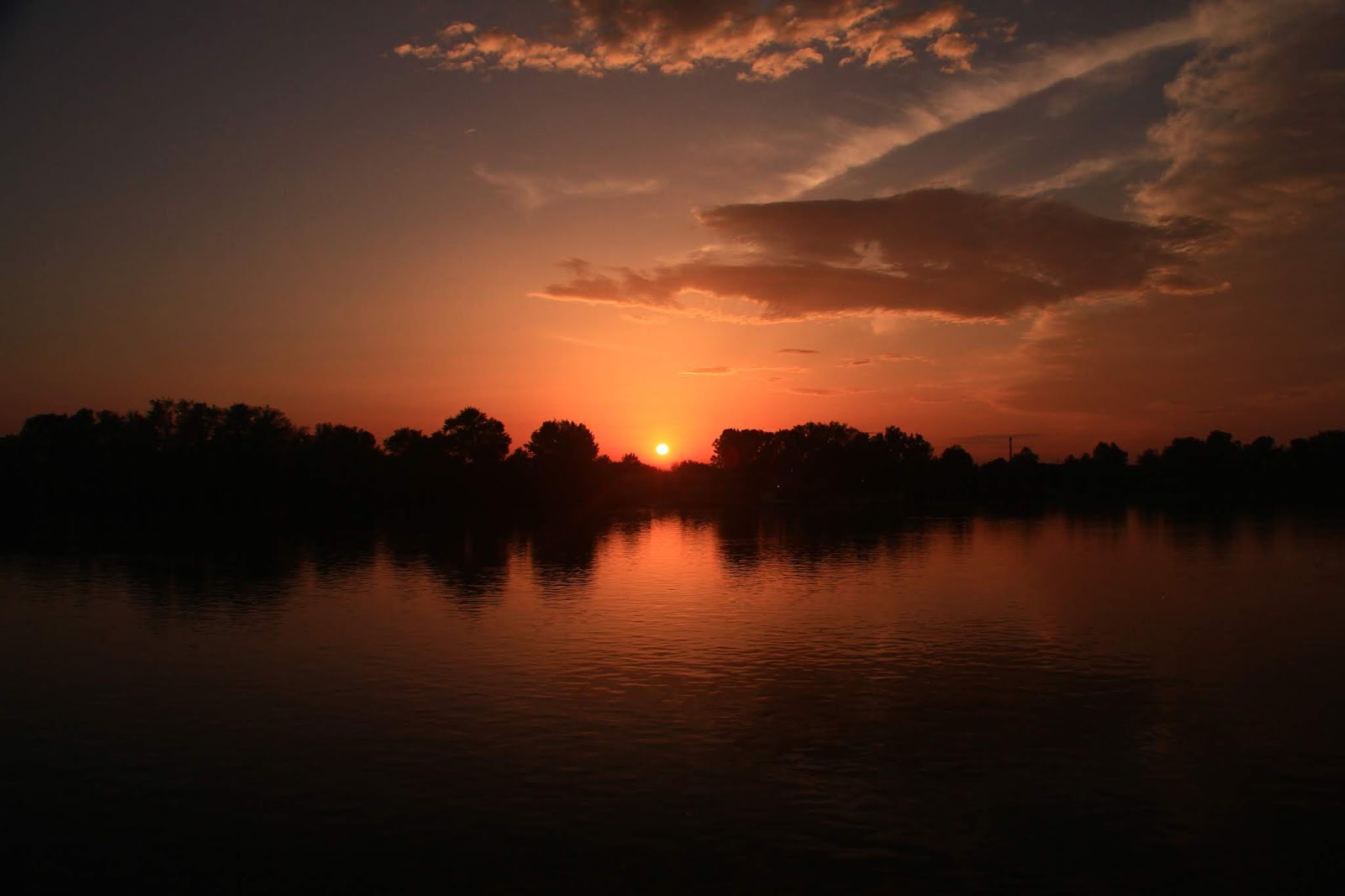
All my life I’ve found solace in music and art and they are great travelling companions through these febrile times. As is photography. When we first decided to go Lazaretto, I began to sift through my catalogue of photographs looking for images that might provide a focus for meditation. And then I thought: why not share some of them online? So I began to put some favourites on social media (Twitter and FaceBook), just one image each day using the hashtag #ImagesOfCalm. A bit corny, I know, but I couldn’t think of a better one. I’m delighted that a few others are now doing the same. I can promise that I have more than enough photographs to see us through at least twelve weeks of self-isolation.

You’d expect images of nature to feature. There’s something reassuring about landscapes, skies, water, trees, flowers, animals and birds. As you’re drawn inside an image of the natural world, you’re reminded that you belong to the created order, that the good earth is your home, and you’re helped to rediscover your place in the scheme of things. Walking in our peaceful Northumberland valley has been both calming and poignant this March. Daffodils and blackthorn blossom, new-born lambs and birdsong all remind us that with or without us, springtime is as fresh and abundant as ever.

Other images feature human creativity. Buildings, sculpture and paintings play a large part in my own imaginative life, so expect to see some of these in my choice of photographs. I believe there’s a special place for still life. This image (taken at Washington Old Hall) suggested itself for the simplicity of its forms and the
quietness of its colouring. The pewter candlestick and ewer are beautiful objects in themselves. But I liked the way they are lit against the curtain and the window, a light-and-shadow chiaroscuro that is so suggestive of these times we are experiencing. And faith can perhaps see in the ewer the implication of life-giving water, and in the candle, the light of grace and truth.

Some images may be more intriguing, perhaps disturbing. Take today’s photo on the left. I was in a cafe on a bleak day in the Port of Blyth and saw this table and chairs on the deck outside the window. It could not have conveyed a more forlorn scene, reinforced by low contrast in a dull even light. Few of my photos have unnerved me more than this one with its hint the surreal, even the dystopian. I wondered whether to post it this morning. Yet this empty table seemed to fit this first dislocated day of lockdown, representing our enforced abandonment of social life, laughter and the love of friends. Undeniably calm, it’s true, but it’s the ‘dead calm’ so well described by Tennyson in In Memoriam, his elegy for the friend he had lost: ‘And in my heart, if calm at all, / If any calm, a calm despair’.

Yet I also found a more promising ‘calm’ in what I saw. As I gazed at it, the furniture seemed to issue an invitation, or at least the possibility of one. For now, they were in a dormant state, tidily and symmetrically stowed on the decking to provide material for photographers like me. But, I thought, it would not be long before they would be peopled again. Like the wintry trees in another image I shared, it was only a matter of time before the scene would be brought back to life, animated by living, breathing people sitting at the table and enjoying the food and drink placed on it. An obvious allusion to the eucharist, of course, the celebration we are denied for now while our churches are closed for worship, but which remains at the heart of the spiritual life for all who follow Jesus.

Finally, I'm including more explicit images associated with faith. You'd expect that from a God-botherer like me, whose understanding of things has been shaped by Christianity all my adult life. On St Cuthbert's Day I posted a distant view of Durham Cathedral, his shrine, with a contemporary interpretation of an Irish high cross in the foreground. On Mothering Sunday I shared a perspective of Joseph Pyrz's Annunciation sculpture of Blessed Mary the Virgin in the Galilee Chapel of the Cathedral. I've long believed that photography can open up perspectives on faith and the spiritual life in ways that can surprise and enchant us. I don’t think I’d realised how potent a tool it can be until now.

So I'd like to think that these 'images of calm' could reassure and strengthen us when things are fragile and we are living through times of risk and danger. 'Go placidly...' I hope too that they may in turn put their questions to us, and encourage us to look again at the assumptions on which we base our lives and how we face a crisis. And maybe, just maybe, they could challenge us to try to live more authentically not least in reaching out to and helping those who need support and care so much.

Tuesday, 19 November 2019

The Prince, Privilege and Public Life

I wasn't going to watch the Newsnight interview with Prince Andrew. Not out of a sense of propriety: there was more entertainment to be had on other channels that night.

But then I read some social media posts. And commentary in next morning's papers. I realised that bigger matters were at stake than mere royal titillation. So I sat down, logged on to the BBC iPlayer and started paying attention.

I don't want to speculate. I don't know whether the Prince was telling the truth or not (or at any rate the whole truth). I don't know what to make of his having "no recollection" of meeting Virginia Giuffre or having sex with her. I can't make any more sense of the notorious photograph of them together than he apparently can. I don't pretend to understand his memory of a precisely datable evening in the Pizza Express in Woking, or the clinical pathology that inhibits perspiration. I don't know how to evaluate his demeanour and body-language during the interview.

And I'm not clear whether the Prince's readiness to submit to this intense interrogation was courageous or foolhardy though the consensus is the latter. Others are experts: they must judge. All I'm competent to say anything about are the words he spoke, on the record, taken at their face value. And what these words mean when someone in public life speaks them, someone who is at the very pinnacle of the establishment by virtue of his being a senior member of the Royal Family.

In a modest way, as a clergyman, I've been in public life for most of my adulthood. I've learned a little about how exposed you are in a leadership role, how your words and actions are placed under an unforgiving spotlight you are never quite prepared for until you find yourself there. I've discovered, sometimes the hard way, how your behaviour is calibrated against the values of the organisation you serve (in my case the Church of England) and against your own professional and personal values, whether they are stated or implicit. ("Would Jesus have said or done this?") In a sense, you have no private life. You are not your own any more.

So watching the interview was a profoundly uncomfortable experience. I could all too easily imagine myself sitting across the table opposite Emily Maitlis for what I would probably remember as the most uncomfortable hour of my life. I could imagine myself perspiring (unlike the Prince) under her scrupulously courteous yet relentlessly forensic examination. I might persuade myself that I could bluff my way through it by turning on the charm, or rely on clever formulae rehearsed in coaching sessions. But I know I would not be capable of maintaining any pretence for more than a few minutes. An hour is a long time in the dock. The truth would out in the end. If it were me.

I don't know about Prince Andrew. Only he knows the full story. But let's make the presumption that his truth was told too, all of it, or at least all that was relevant to the scope of the interview. What did I make of that as I imagined myself in his shoes?

My answer is that if it were me, I would reckon that I'd already rendered myself unfit for public office. Both on the basis of what I hadn't said as well as what I had.

It's what the Prince didn't say that was most culpable. Jeffrey Epstein's record is not a matter of conjecture. He was a convicted sex offender. He procured ("trafficked") women and underage girls for sex with himself and others. The Prince's close association with him and the inevitable collusion with his lifestyle and behaviour would already have posed grave reputational risks. But for him not even to hint in the interview that he understood how Epstein's abuse of women and girls would have created victims who would be damaged for life is beyond culpable. Not to express the slightest care for or sympathy towards them, not to deplore Epstein’s behaviour would be incredible if we had not heard for ourselves this sound of a gaping royal silence.

As for what he did say, his only acknowledgment of any misjudgment, the only hint of having made a big mistake was in respect of visiting Epstein after his release from prison in order, he said, to terminate his relationship with him. That gives the game away: in that admission, the Prince was acknowledging that his relationship with Epstein was altogether toxic, hence the need to end it. There was a mysterious reference to "honour" in doing this face to face rather than through a phone call. Let us suppose so. But there's something oddly self-regarding about invoking your own sense of honour when the entire conversation has been about what most people would regard as at least flirting with serial dishonour. The register of self-justification hardly matched the narrative. It felt dislocated, out of context.

You'd have thought that the Prince would have been advised by his coaches to adopt a seriously contrite approach to this interview. Maybe to have said something like this. Yes, I've messed up badly. My behaviour has been at best self-indulgent, not to say unforgivable. And worst of all is the plight of the women and girls who were victims of my friend's predatory abuse with which, by my silence in not condemning it, I've colluded. How can I ever put right that terrible wrong done to them? How can I show them that the damage they have suffered will go on weighing on my conscience for the rest of my life just as it will forever haunt theirs? As it was, he came across as entitled people often do - not guided by the same moral compass most of us invoke when placed in ambiguous or compromising situations.

I'm trying not to speculate about things the Prince either denied or was silent about. I'm going only on what he said in front of us all. He must make up his own mind about what he does next. But if it were me, what would I do?

I was asking myself that question all through the interview. But it's really not that hard for me to answer. I'd have had to admit to a sense of shame that events had brought me to this point. I honestly do not think I could continue in public life in the light of it. Not with honour. I'd be too compromised by my past, and I'd risk in turn compromising the institutions in which I held a public role. If I said I'd be too ashamed to continue in office as a public leader, I'm not overstating it, I think. I recognise that it may feel different for a member of the Royal Family. But I'm also questioning whether it should be different. Honour and trust come into everything we do and are in our public roles. Leadership that is worth anything collapses if they are forfeited. So I would have to say that if it were me, I'd now have reached that point, and it was time for me to retreat back into private life with as much dignity as I could muster. Not because my reputation had been damaged beyond repair. Not even because of the harm I had done to my family, my associates and my institution. But because (I hope) I’d want to do the right thing as a matter of principle: taking responsibility for my behaviour and acting with integrity in the light of it.

In my leadership roles I've learned a lot from the Seven Principles of Public Life that people holding public office in appointed or elected roles are required to sign. These roles include health and education, the police, the courts, the civil service and national and local government. The Principles are: selflessness, integrity, objectivity, accountability, openness, honesty, and the example we set in leadership. We are right to prize such ethical standards and measure our behaviour in the light of them. We are right to expect that our leaders and representatives in public life will try at all times to live up to them.

I wonder what answer Emily Maitlis would have got if she'd put them to the Prince?

Sunday, 10 April 2016

Dear Prime Minister: an open letter

Dear Prime Minister

I've sympathised with you during this past week. You've been through the kind of ordeal familiar to most leaders where a cloud no more than the size of a man's hand suddenly becomes a mighty storm. You were right to strike a contrite note in your speech. Yes, it would have been so much better if you had been frank with us from the outset. I believe your instincts are for honesty, and it's such a pity that you seem to have been advised otherwise to begin with. Evasiveness is never a good tactic. But it's never too late to say sorry and you did. Thank you.

However, my overriding concern today is not your own political fortunes but the coming EU Referendum. I'm very much afraid that you may have handed the Leave campaign a gift they could never have expected. "This walks straight into every Eurosceptic’s dream. It may be unfair on David Cameron. But it is very, very dangerous” Matthew Parris has written. Because if the public's view of you has changed (and it's only an if - the coming days will tell) and it's not so inclined to trust you about your personal finances, why should they trust you when it comes to the European Union?

I write as a convinced European who believes like you that this country will be far better off within the EU than outside it. And I don't just mean economically or in terms of defence, security and geopolitics. I mean what the UK has to bring to the EU as one of its leading nations committed to the common good as well as our own. It would be nightmare for me, and many like me, to wake up on 24 June to find that we had walked away from the family of peoples to whom we naturally belong.

Here's where I'm afraid you have unwittingly been the goose that has laid Brexit a golden egg. As today's Observer says, "voters may decide to forget the case for the European Union and engage in the altogether more satisfying activity of kicking out David Cameron." I hope that comment proves wrong. This is absolutely not a vote of confidence in you. But electorates have minds of their own. So now of all times, we need you to be a credible leader who can change hearts and minds not only by the persuasiveness of good argument but by your personal qualities of integrity and trustworthiness. It's not that the case for remaining in the EU has changed in any way. But public perception may have shifted in the past week: perception of your leadership, perception of your political judgment.

In a few days, the official EU Referendum campaign will be launched. How will you play this moment of opportunity?

If I may say this, I think your best bet is to go on presenting yourself to the public as the leader who is humble enough to recognise his mistakes. It was genuinely moving to hear you say to your audience that you could have handled things better and that you would learn for the future. That was courageous. It's a cliché to quote "a sadder and a wiser man" but perhaps it applies. And I believe this may help you win your case (sorry - I mean our case!). You can show that EU membership is not a matter of your own political survival or historic legacy but comes out of a real personal conviction, a deeply rooted human wisdom, a patriotism that is proud of and desires the very best for our country, and a Christian conscience that seeks the common good of all our partner nations.

One final note. I think that the more you can show that you are really listening to our Brexit friends and taking their concerns seriously, the better it will be. I think that like me, you deplore the bad tempered, sometimes abusive, register some parties in this debate have fallen into. I'm sure you value courtesy, intelligence and good faith in the way political choices are presented and discussed. Good listening isn't just for crises. It's an attribute of every wise leader. You will help set the tone.

Maybe recent events have done you a favour though it may be hard to see it that way just yet. They may have forced you to show a side of yourself to the public that we had not seen before - listening, honest, penitent, wanting to learn and do things differently. And maybe all with a bit more feeling, humaneness if you like. Many of us have warmed to that and - whatever our personal political convictions - genuinely wanted to wish you well. These qualities can help you sound an even more convincing note in the coming weeks before the Referendum. I very much hope so for the sake of the nation and for Europe as a whole.

I hope you won't mind my writing in this personal way. This comes with my prayers.

With best wishes
Michael

Thursday, 7 April 2016

The EU Referendum: why we shouldn't walk away from our promises

Earlier this week, on her wedding day, I walked my daughter up the aisle of the church where I had been Vicar in the 1980s. It was a proud and moving thing to do. She was beautiful in her wedding dress. Well, what bride's father wouldn't say that? It was a lovely service, solemn but joyous. The words and music all felt exactly right. Our hearts reached out to this young couple, so tender and so happy together.

I wasn't (for once) thinking about the European Union that day. But afterwards, I thought about what the preacher had said in his fine homily. He spoke about the marriage vow, and how a few words said in public change everything. I've quoted the philosopher J. L. Austin before in a blog. He wrote a famous book called How To Do Things With Words. He took the marriage vow as an example of a "performative utterance", words that change things, make a significant difference. When the bridal couple process out of church at the end of the marriage ceremony, they have taken on a different status from what they had when they came in. They now have new privileges, duties, responsibilities. It's their promises that effected that change.

What's that got to do with the EU referendum? 

Simply this, that as members of the European Union, we have signed treaties that bind us to this family of peoples. We have given undertakings and made promises to our fellow EU nations. Like marriage, a treaty is a kind of covenant. It commits us to fidelity, to being true to our word. We British take pride in behaving honourably and being trustworthy. It isn't only Englishmen (and women) whose word is their bond. I'd like to think that our neighbours in Europe thought they could safely trust us to honour our undertakings. I'd like to imagine that to them, whatever shortcomings the British may exhibit, unreliability and bad faith were not among them.

Thanks to the referendum, we are now considering walking away from commitments we have freely entered into. I find this deeply disappointing. It's not that any treaty is irrevocable, or that situations may not change so drastically that old undertakings need renegotiating. But to me, the very possibility of Brexit feels like the threat of a divorce. It would be the un-saying of promises that were made in good faith, in an environment of trust that pledged our nations to work together for the common good and our mutual flourishing. It would be the unraveling of the bonds of friendship and loyalty that held our peoples together. It would be, I think, to break our word which our neighbours had come to trust, and on which they thought they could rely. 

Am I making too much about "honour"? Christian wisdom would say not. In the Bible, the vow or promise is sacred, born witness to not only by human beings but by God himself. Covenant-breaking is one of the worst of sins you could commit: maybe this lies behind the gospels' condemnation of Judas for betraying - handing over - Jesus to be crucified. "Let your yes be yes, and your no be no" he teaches: "anything more than this comes from evil". Theologically, pledging our word is to imitate the God who in Jesus, pledges his living Word to humanity and in him utters his final Yes to the world he loves. Honour is a central idea in all religious faiths. A word once given is solemn and binding. 

Like any marriage, our relationship with the EU has had its ups and downs. It has been tested beyond what was originally anticipated. When a marriage is under pressure, it's tempting for one or both partners to walk away. Many do. But marital therapists tell us that to begin with at least, staying in the relationship and facing its difficulties openly and honestly in the hope of achieving a better life together is better than the easy option of escaping. It's not a perfect analogy, but the point is that our relationship with Europe is not an abstract connection with some faceless entity, "the EU", that we're talking about. It's a "marriage" to twenty seven other nations. It is they we would be disappointing and letting down, people to whom we have obligations of neighbourliness and friendship, particularly the most needy among them. 

There isn't anything about this in the Government leaflet on the referendum that will drop on to our doormats in a few days' time. That focuses mainly on whether we are better off in or out, with a postscript on how the EU can achieve things (such as security and climate change) that no nation can do on its own. I don't have any quarrel with its contents. But it doesn't go far enough, doesn't probe the very reasons we belong to the European Union at all, and doesn't ask us whether we think it matters to honour our treaty commitments or not. 

But surely it does matter that we commit to our undertakings and keep our promises. In one of the Psalms (15), the virtuous man or woman is someone who, having made a promise to a neighbour, does not go back on that word, even though it was troublesome and inconvenient. As individuals we want to be trustworthy and thought of us reliable. Fidelity is a value almost everyone shares. So we ought to uphold it as a nation too. And not turn our backs on the very many people of other European nations who are begging us not to walk away.