About Me

My photo
Pilgrim, priest and ponderer. European living in North East England. Retired parish priest, theological educator, cathedral precentor and dean.
Showing posts with label lazaretto. Show all posts

Tuesday, 24 March 2020

Images of Calm in Anxious Times

The tenth day of going Lazaretto (in self-isolation) and the first of lockdown. It’s a strange existence for all of us and a worrying one. I’ve been aware of the anxiety I’ve felt in the face of Covid19’s relentless advance. The fact that this threat is silent and invisible adds to the unease. When the Prime Minister spoke to the nation last night about what lockdown must mean, I wondered whether this is what it felt like on the morning of 3 September 1939 when another PM told Britain that she was now at war.

I guess my response was much the same as yours. I thought of the people - so many of them, young as well as old - whom the virus has touched and made sick, mortally so for some. I thought about the courageous men and women on the frontline of health care who are facing impossible life-and-death decisions about where to allocate resources and seem inadequately protected themselves. I thought about the countless people whose finances, livelihoods and homes have suddenly become immensely precarious. I thought about our own locality, our neighbours in this agreeably ordinary village community. I thought of our friends in other parts of the world and here in Britain. I thought of our family, our grandchildren who can barely comprehend what is happening to them, and whom we may not see for months. And yes, of course I thought of ourselves too, quarantined in our home, so lucky to be safe and well (so far), and provided for and with each other to support and love.

It’s hard not to be troubled by turbulent thoughts. The virus extends a force-field over all of us. We are caught up in a kind of psychic instability. Maybe I’m just a natural worrier. I find it easy to imagine, no, expect, the worst. ‘What if...’ this happens, or that, or a thousand other possibilities? Anxious times feed such Puddleglum reveries. Almost all of them are fantasies that take me nowhere except deeper into the slough of despond. Or they are imagined threats I can do nothing to mitigate, tomorrow’s bridges there’s no point in trying to cross today. And the longer we have in lockdown, the more time there is to fill with morbidity.


There’s a spiritual task here. It’s about quietening the spirit, cultivating equanimity, nurturing a more even temperament. As the well-known text Desiderata has it, that adorns many a living-room wall, ‘Go placidly amid the noise and the haste, and remember what peace there may be in silence.... Nurture strength of spirit to shield you in sudden misfortune. But do not distress yourself with dark imaginings. Many fears are born of fatigue and loneliness. Beyond a wholesome discipline, be gentle with yourself....’ Which is not far away from the wisdom writers’ encouragement to live not out of fear but out of trust, echoed in Jesus’ words in the Sermon on the Mount: ‘Do not worry about your life’ (Matthew 6.25-33). Living trustfully is a key insight of the scriptures.

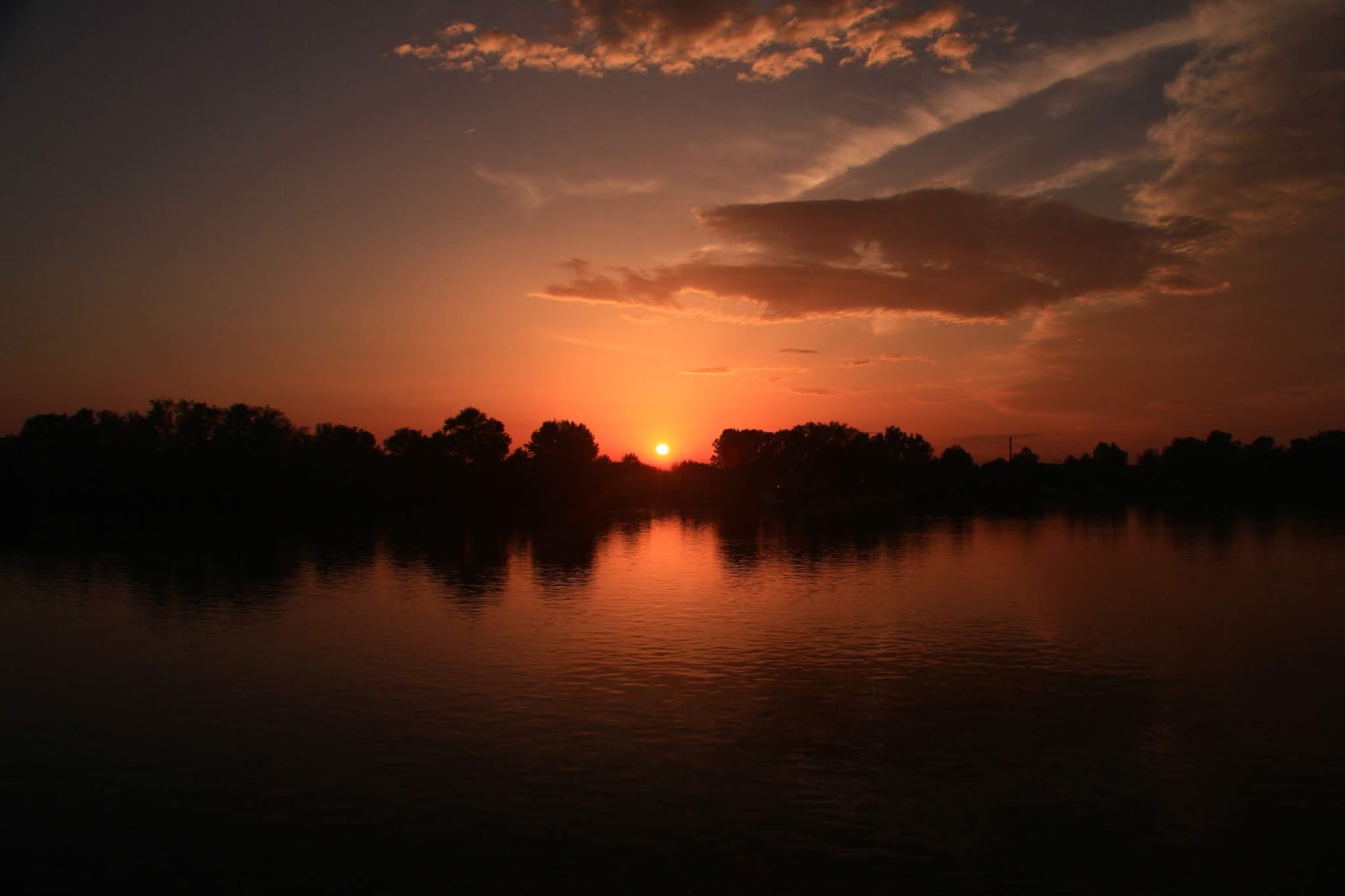
All my life I’ve found solace in music and art and they are great travelling companions through these febrile times. As is photography. When we first decided to go Lazaretto, I began to sift through my catalogue of photographs looking for images that might provide a focus for meditation. And then I thought: why not share some of them online? So I began to put some favourites on social media (Twitter and FaceBook), just one image each day using the hashtag #ImagesOfCalm. A bit corny, I know, but I couldn’t think of a better one. I’m delighted that a few others are now doing the same. I can promise that I have more than enough photographs to see us through at least twelve weeks of self-isolation.

You’d expect images of nature to feature. There’s something reassuring about landscapes, skies, water, trees, flowers, animals and birds. As you’re drawn inside an image of the natural world, you’re reminded that you belong to the created order, that the good earth is your home, and you’re helped to rediscover your place in the scheme of things. Walking in our peaceful Northumberland valley has been both calming and poignant this March. Daffodils and blackthorn blossom, new-born lambs and birdsong all remind us that with or without us, springtime is as fresh and abundant as ever.

Other images feature human creativity. Buildings, sculpture and paintings play a large part in my own imaginative life, so expect to see some of these in my choice of photographs. I believe there’s a special place for still life. This image (taken at Washington Old Hall) suggested itself for the simplicity of its forms and the
quietness of its colouring. The pewter candlestick and ewer are beautiful objects in themselves. But I liked the way they are lit against the curtain and the window, a light-and-shadow chiaroscuro that is so suggestive of these times we are experiencing. And faith can perhaps see in the ewer the implication of life-giving water, and in the candle, the light of grace and truth.

Some images may be more intriguing, perhaps disturbing. Take today’s photo on the left. I was in a cafe on a bleak day in the Port of Blyth and saw this table and chairs on the deck outside the window. It could not have conveyed a more forlorn scene, reinforced by low contrast in a dull even light. Few of my photos have unnerved me more than this one with its hint the surreal, even the dystopian. I wondered whether to post it this morning. Yet this empty table seemed to fit this first dislocated day of lockdown, representing our enforced abandonment of social life, laughter and the love of friends. Undeniably calm, it’s true, but it’s the ‘dead calm’ so well described by Tennyson in In Memoriam, his elegy for the friend he had lost: ‘And in my heart, if calm at all, / If any calm, a calm despair’.

Yet I also found a more promising ‘calm’ in what I saw. As I gazed at it, the furniture seemed to issue an invitation, or at least the possibility of one. For now, they were in a dormant state, tidily and symmetrically stowed on the decking to provide material for photographers like me. But, I thought, it would not be long before they would be peopled again. Like the wintry trees in another image I shared, it was only a matter of time before the scene would be brought back to life, animated by living, breathing people sitting at the table and enjoying the food and drink placed on it. An obvious allusion to the eucharist, of course, the celebration we are denied for now while our churches are closed for worship, but which remains at the heart of the spiritual life for all who follow Jesus.

Finally, I'm including more explicit images associated with faith. You'd expect that from a God-botherer like me, whose understanding of things has been shaped by Christianity all my adult life. On St Cuthbert's Day I posted a distant view of Durham Cathedral, his shrine, with a contemporary interpretation of an Irish high cross in the foreground. On Mothering Sunday I shared a perspective of Joseph Pyrz's Annunciation sculpture of Blessed Mary the Virgin in the Galilee Chapel of the Cathedral. I've long believed that photography can open up perspectives on faith and the spiritual life in ways that can surprise and enchant us. I don’t think I’d realised how potent a tool it can be until now.

So I'd like to think that these 'images of calm' could reassure and strengthen us when things are fragile and we are living through times of risk and danger. 'Go placidly...' I hope too that they may in turn put their questions to us, and encourage us to look again at the assumptions on which we base our lives and how we face a crisis. And maybe, just maybe, they could challenge us to try to live more authentically not least in reaching out to and helping those who need support and care so much.

Wednesday, 18 March 2020

Exiles in our Own Home: a spirituality for self-isolation

In this unlooked-for state of self-isolation or as I prefer to call it, Lazaretto which I wrote about in my last blog, the days stretch languidly ahead. They extend beyond the forthcoming spring equinox, beyond Holy Week and Easter, beyond Pentecost, even beyond the summer solstice when the days start getting shorter again.

My diary has been emptied of all engagements. No preaching or speaking, no social events to look forward to, no volunteering in the charity bookshop, no trips to see the grandchildren, no weekends away, no shopping expeditions, no bus or train journeys, no visits to the library or cinema, restaurants, cafes and art galleries, no church services to go to. Lazaretto is a strange land to find myself in.

Who knows how long this quarantine will last?  Twelve weeks are being spoken about. But it could be twenty or more, taking us towards the threshold of autumn. How will we know when it is safe to come out again? Whose permission will we need? What will it be like to take up normal activity again, frequent crowded places, start travelling, socialising, hugging and shaking hands? What will it take to banish worry and fear?

If it were winter, we would call it hibernation. But it will be summer, so the right word for it is aestivation. And spring and summer days will always have the capacity to lift our spirits, make us glad that light and warmth have arrived. They will entice us out into the open to enjoy clean fresh air (all the fresher because of lowered emissions during the pandemic through the sharp decline in air travel that it's brought). They will invite us to find our place once again in the natural world and celebrate its loveliness. Despite what some are saying, unless we have symptoms of infection, there’s no reason not to go outside during quarantine. We should take plenty of exercise. Nature has a renewing effect on mind and body. (We simply need to stay a safe distance away from anyone we meet, but the open air does provide opportunities for social contact that would be risky indoors.)

I've been hunting for analogies to help me make a good aestivation. It would be so easy for Lazaretto to be defined by negation - here's what I won't do anymore, here's what I've had to give up, here's the heavy price I'm having to pay on this long ordeal of empty times and spaces. How might I understand it more positively, as an opportunity for good things to happen, as an enriching and rewarding adventure, as gift? In my last blog, I offered a few practical suggestions. In this and coming blogs I want to see if there are comparable experiences that could shed light on what lies ahead.

My first analogy is exile. I like that image because, like self-isolation, it is unwished for. No-one goes into exile willingly. No-one contemplates the loss of home or land or community, all that's familiar and that makes us feel safe. Exile is an experience of dislocation that is enforced, often without warning. I think all this is to some extent true of quarantine. Like the exiles of Psalm 137, we can become despondent or angry, experience severe turbulence in our emotions. 'How shall we sing the Lord's song in a strange land?'

But exile can be a great teacher. Much of the greatest literature in the Hebrew Bible originated in the sixth century BCE when the exiles had no choice but to re-examine the foundations of their faith in an environment where the question was inevitably, what theological, spiritual sense can this catastrophe possibly make? The fruits of that deep search are found in the Torah, the classical prophets, and many of the Psalms and wisdom writings. Israel could never have expected that the destruction of the temple, the end of the monarchy, the conquest of the land and exile to a far country could possibly be gift. But so it proved.

So in the light of that observation, I am asking myself, how should I contemplate these coming weeks of exile in my own home?

I'm inspired by a passage in one of those great prophets of exile, Jeremiah. We're used to thinking of him as a man weighed down by a sense of doom. It's true that his laments are among the most passionate outbursts of anger in the scriptures as he internalises the people's experience of exile and the conclusion that God must have abandoned them. But how different is the tone of a letter he wrote to the exiles in Babylon.

Thus says the Lord of hosts, the God of Israel, to all the exiles whom I have sent into exile from Jerusalem to Babylon: Build houses and live in them; plant gardens and eat what they produce. Take wives and have sons and daughters; take wives for your sons, and give your daughters in marriage, that they may bear sons and daughters; multiply there, and do not decrease. But seek the welfare of the city where I have sent you into exile, and pray to the Lord on its behalf, for in its welfare you will find your welfare. (Jeremiah 29.4-7)

How to be at home in exile, how to inhabit it? - that's the challenge Jeremiah puts to the 
exiles. It seems extraordinary to ask of them that they should befriend this experience of disorientation. It goes against all their instincts to invest in exile in this way. Yet Jeremiah understands how adversity always invites us to renegotiate life on a new set of terms. And when we do this, undreamed of possibilities open up. No doubt he has learned this through his own experience. There is no landscape so barren that life cannot begin again - even if it takes time to glimpse the green shoots that promise springtime at the end of a long winter. 

But it's the conclusion that's so starting. Seek the welfare of the city and pray to the Lord on its behalf! You'll forgive the intruded exclamation mark, but this arresting instruction deserves it. We thought that exile meant that God had forgotten us. We thought this city was an unclean, godforsaken place. We thought that the best we could hope for was survival, not building houses, sowing harvests, bringing up families. But look! The prophet says we must say our prayers for this place. We must look for it to flourish because if it does, we shall too. Which can only mean that God is as present here in Babylon as we knew him to be back in Judah. He is not an absent deity after all. As the covenant promised he always would be, he is with us. And he will not forsake us.

As a person of faith, I want to discover how these insights speak into this twenty-first century expression of exile. Self-isolation, as I said last time, is a depressing term that seems to me to encourage all that the prophet wants to resist: self-absorption, self-concern, self-pity. Jeremiah's letter is saying: don't let exile diminish your life. Don't let it erode your capacity to reach into each new moment to uncover the possibilities latent there. Keep hope alive. Remember your community of fellow-exiles, especially people in need. Try to ask, even in times of crisis, where God might be found in what is happening to us. See if there is wisdom to be distilled in the events that happen to us, however painful or baffling or bleak. Share 
what you discover. Ask others what they are learning too. 

I know from my own previous experiences of exile that all this takes time. 
Whether it's been disappointment or failure, conflict or bereavement, it won't be hurried. It's important to acknowledge what we feel when we feel it, and to be emotionally and spiritually honest in recognising it. We mustn't rush prematurely out of Good Friday into Easter. But time will do its work. I can't predict as this exile begins what life will be like in one month's time, or two, or three. But I profoundly believe that God will be with us throughout it. Even with those for whom these coming weeks pose real threats of economic hardship, loneliness, physical and mental health or bereavement. 

Especially them, especially those who will suffer the most. It's for all of us to bring help, support and comfort to our fellow exiles wherever and however we can. And hope in dark times. This is the quarantine spirituality of Lazaretto.  


Tuesday, 17 March 2020

Self-Isolating: 'Going Lazaretto'

It looks like there's going to be a lot of time for woolgathering in the next few weeks.

Jenny and I are now in self-isolation here in Burswell House. How I hate that phrase with its self-serving connotations! We are in quarantine, or as I think I'm going to call it, going lazaretto. The 'lazaret' in early modern times was a place of quarantine for travellers at sea. Sometimes it would be a well detached building on or near the shore, sometimes an island close to a harbour or a ship permanently at anchor. Lepers would be looked after there, or mariners (and slaves) suffering from diseases like cholera or plague. (See the image at the end of this blog.)

The name comes from Lazarus, not the brother of Mary and Martha whom Jesus raised from the dead, but the poor man in the parable who lay begging at the rich man's gate (Luke 16.19-31). When he died, he was carried up into heaven by angels and found safety in Abraham's bosom while the rich man who had ignored the destitute beggar ended up in hell. So the lazaretto is a place of safety and refuge where the needy can be looked after. And in this pandemic, looking after one another is the first call on us all if we want to love our neighbour.

We made the decision to go lazaretto at the weekend, before the Prime Minister's speech yesterday. We are of that certain age (three score years and ten), and I am male with an 'underlying health condition'. Who knows if we are already carrying the virus? If so, we need to protect others from it. And to take sensible measures to protect ourselves, and so lighten the load on our already hugely over-burdened NHS. Yesterday, Jenny got talking to someone married to a virologist. That couple, aware of what was happening in China, has been in lazaretto since Christmas. Until now they have not been saying anything about it, reckoning that people would think them crazy. No-one will think that this morning.

It's a strange, unwelcome decision we've made. And a scary one. We have no idea what it will feel like after a week, a fortnight, three months of quarantine. I spent yesterday shutting down my life outside our home. I contacted the Oxfam bookshop and Hexham Abbey where I volunteer and explained. I apologised to the committees I attend that are due to meet in the next two weeks. I withdrew from a speaking engagement later this month, and (this was especially hard to do) from preaching Holy Week in a Cathedral in the south of England. We had already decided not to travel to continental Europe last week (and with the rapid shutting down of everyday life in France and Germany, it's possible we might not have got back to the UK for some while). We won't be socialising any more (such a lovely dinner party we went to last week, and we all behaved very circumspectly without the normal hugs and handshakes, but it was our last social event for some time). We won't be using public transport. We'll go to the shops only when we need to (and hope that panic buying hasn't emptied the shelves).

These choices are facing all of us now, and all the institutions we belong to. Whether to stay open, how to maintain a working staff, if and when to close, and in some cases indeed, how to remain viable in the face of real economic threat. Churches and cathedrals are having to decide how, if at all, to hold services for the foreseeable future, especially during Holy Week and Easter. If our personal quarantined life is going to be hard, I need to remember that for others it's going to be much, much tougher: those who were already ‘just about managing’ or not managing at all, those who don’t know if they’ll still have a job by the end of the week, those who are chronically sick and in fear of what infection by this virus could mean for them. These are extraordinarily difficult times for  leaders in public life and in our businesses, caring organisations and faith communities.

None of us who were born after the war have ever known anything like this. I can remember my parents being worried when I caught a cold during the Asian flu pandemic of 1957. I don't recall any special public health warnings being issued; if they were, I was too young to be paying attention. But if the famous 'wartime spirit' is any guide (and I'm aware how tiresome it can be to invoke it), then it's important to think positively, keep hope alive, not succumb to self-pity, paralysis, despondency or despair, however frightened we may be.

Forgive me for striking a domestic note in the face of such challenges. I can only say what this may mean for me. I think that when we find ourselves isolated, as we shall inevitably be, we need to pay attention to the shape of each day. Pattern and rhythm to structure time are essential if we are not to become listless or bored. St Benedict understood this when he wrote his Rule for Monks, allocating times each day for prayer, study and work alongside mealtimes and sleep. In particular, going into quarantine could be a real opportunity for us to rediscover this insight, think about the part prayer, spirituality, meditation or mindfulness - whatever we call it - plays in our lives, and allocate time to it for our soul's health. It's especially significant that we are having to think about this during Lent, a kind of 40-day quarantine, a time for spiritual renewal as we look forward to Easter. There's a lot of enforced 'giving up' we are all having to do this year. But think of the time it is releasing to discover new opportunities for personal and spiritual growth.

Fresh air and exercise is going to be important. We are lucky here in Northumberland to be surrounded by beautiful countryside that we can walk from our own front door. There's no reason not to go out and enjoy the springtime as the days grow longer; and no reason not to stop and talk to the people I meet, as long as we keep a safe distance from one another. We must not become too precious about our quarantine. As an introvert, I'm not afraid of my own company for hours on end, though I realise that for some, it is going to be a big hardship not to have frequent social contact with other people. But solitude is precisely not a matter of social distancing, only physical distancing. We have telephones and the internet, TV and radio. We are better connected today than we have ever been. It's important to remain socially linked by whatever means we can if we are not to be overtaken by loneliness. In this we must help one another.

For people not yet retired, there's a lot of emphasis on working from home if possible. So I'm asking myself what this could mean for me as a volunteer. I'm not clear yet how I could go on supporting the churches and organisations I'm involved in remotely, from my study desk, though I've asked whether there is any writing I could do, or social media activity or even, in the case of Oxfam, pricing rare and antiquarian books for the online bookshop. This emergency is requiring us all to be inventive. I want to go on contributing if I can. And seeing how I can lend support to Coronavirus initiatives being developed in my own village and locality.

I could go on, and probably shall in future blogs as lazaretto becomes a daily lived experience. Among the possibilities it may bring could be to nurture personal relationships: marriage (because in my case, quarantine is a shared experience), family, friends. Maybe there are people from my past whom I can make contact with during this time. I'll no doubt read books, watch films, listen to music, perhaps work at a foreign language or get down to some writing... We can all have projects that help give direction to time's arrow. What matters for our collective health and our personal wellbeing is to be open to the opportunities and seize the day. We did not want this virus, and its effects on all of us are going to be severe in ways we can't foresee yet. There was so much we took for granted a few weeks ago, including (for most of us) our own health and our hope to remain alive for a few more years yet. All that has now changed. It's 'the sacrament of the present moment' that matters now, being thankful for each day, living well in the light of its gift and possibility.

In all this I'm thinking aloud. The virus is making us exiles in our own land. The landmarks have shifted, nothing is quite staying in place any more. We are taking our first steps on a journey that is going to be long and testing. Like Christian and Hopeful in Pilgrim's Progress there will be more than one Slough of Despond to negotiate, and the Valley of the Shadow of Death and the Hill Difficulty. We shall pass by Doubting Castle and Vanity Fair. But Delectable Mountains too, I hope, and enticing glimpses of the Celestial City, whatever that vision means for us. The question is, will we carry on travelling as pilgrims? Try to find and name the kindness and goodness in things? Glimpse the presence of God even - especially! - in what is most painful and cruel and hard? Do what we can to help others who need what we could bring them? That’s my prayer.

Stay safe. Be of good cheer. You are not alone. Buon Lazaretto!