About Me

My photo
Pilgrim, priest and ponderer. European living in North East England. Retired parish priest, theological educator, cathedral precentor and dean.
Showing posts with label photography. Show all posts

Tuesday, 24 March 2020

Images of Calm in Anxious Times

The tenth day of going Lazaretto (in self-isolation) and the first of lockdown. It’s a strange existence for all of us and a worrying one. I’ve been aware of the anxiety I’ve felt in the face of Covid19’s relentless advance. The fact that this threat is silent and invisible adds to the unease. When the Prime Minister spoke to the nation last night about what lockdown must mean, I wondered whether this is what it felt like on the morning of 3 September 1939 when another PM told Britain that she was now at war.

I guess my response was much the same as yours. I thought of the people - so many of them, young as well as old - whom the virus has touched and made sick, mortally so for some. I thought about the courageous men and women on the frontline of health care who are facing impossible life-and-death decisions about where to allocate resources and seem inadequately protected themselves. I thought about the countless people whose finances, livelihoods and homes have suddenly become immensely precarious. I thought about our own locality, our neighbours in this agreeably ordinary village community. I thought of our friends in other parts of the world and here in Britain. I thought of our family, our grandchildren who can barely comprehend what is happening to them, and whom we may not see for months. And yes, of course I thought of ourselves too, quarantined in our home, so lucky to be safe and well (so far), and provided for and with each other to support and love.

It’s hard not to be troubled by turbulent thoughts. The virus extends a force-field over all of us. We are caught up in a kind of psychic instability. Maybe I’m just a natural worrier. I find it easy to imagine, no, expect, the worst. ‘What if...’ this happens, or that, or a thousand other possibilities? Anxious times feed such Puddleglum reveries. Almost all of them are fantasies that take me nowhere except deeper into the slough of despond. Or they are imagined threats I can do nothing to mitigate, tomorrow’s bridges there’s no point in trying to cross today. And the longer we have in lockdown, the more time there is to fill with morbidity.


There’s a spiritual task here. It’s about quietening the spirit, cultivating equanimity, nurturing a more even temperament. As the well-known text Desiderata has it, that adorns many a living-room wall, ‘Go placidly amid the noise and the haste, and remember what peace there may be in silence.... Nurture strength of spirit to shield you in sudden misfortune. But do not distress yourself with dark imaginings. Many fears are born of fatigue and loneliness. Beyond a wholesome discipline, be gentle with yourself....’ Which is not far away from the wisdom writers’ encouragement to live not out of fear but out of trust, echoed in Jesus’ words in the Sermon on the Mount: ‘Do not worry about your life’ (Matthew 6.25-33). Living trustfully is a key insight of the scriptures.

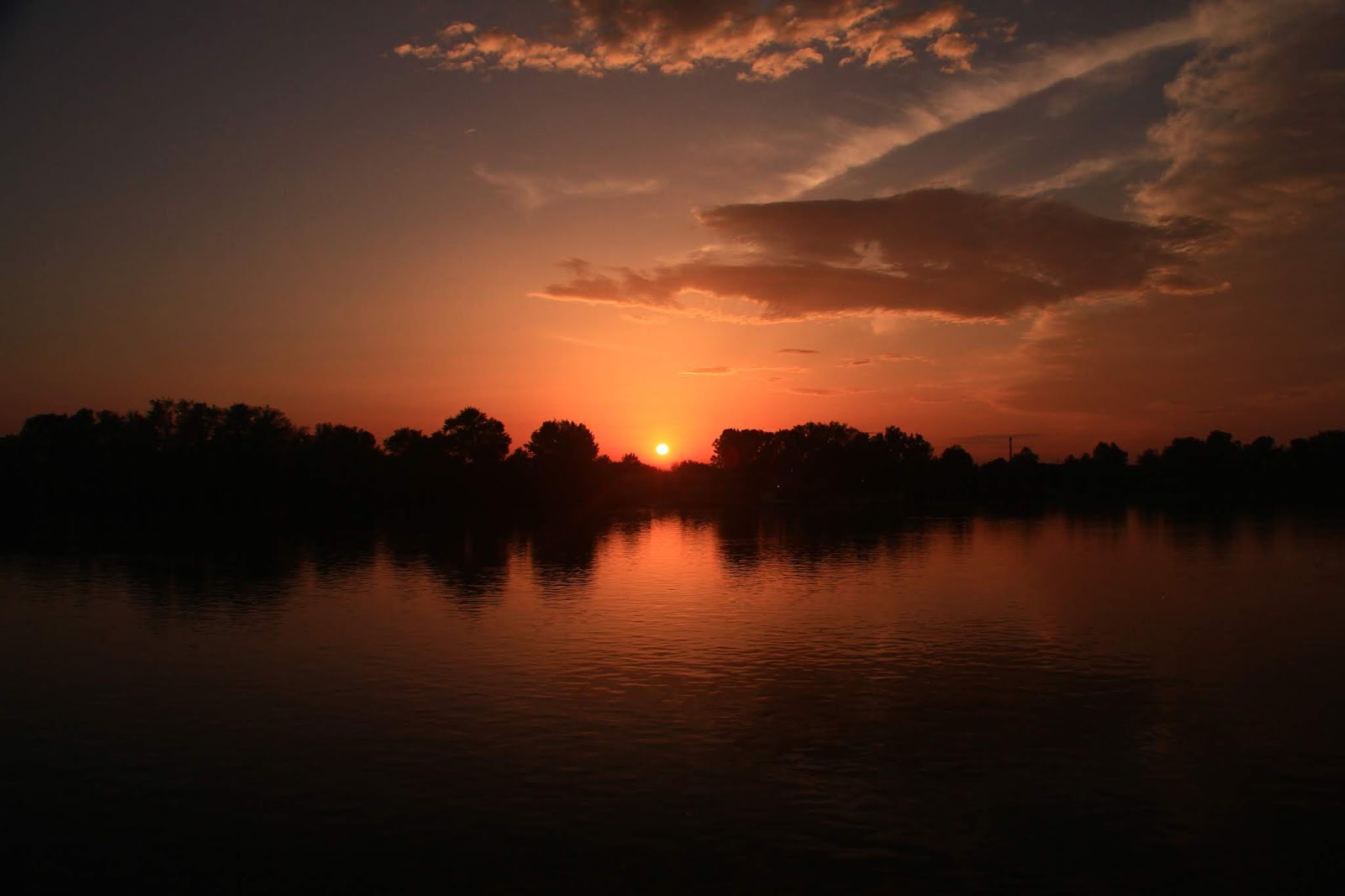
All my life I’ve found solace in music and art and they are great travelling companions through these febrile times. As is photography. When we first decided to go Lazaretto, I began to sift through my catalogue of photographs looking for images that might provide a focus for meditation. And then I thought: why not share some of them online? So I began to put some favourites on social media (Twitter and FaceBook), just one image each day using the hashtag #ImagesOfCalm. A bit corny, I know, but I couldn’t think of a better one. I’m delighted that a few others are now doing the same. I can promise that I have more than enough photographs to see us through at least twelve weeks of self-isolation.

You’d expect images of nature to feature. There’s something reassuring about landscapes, skies, water, trees, flowers, animals and birds. As you’re drawn inside an image of the natural world, you’re reminded that you belong to the created order, that the good earth is your home, and you’re helped to rediscover your place in the scheme of things. Walking in our peaceful Northumberland valley has been both calming and poignant this March. Daffodils and blackthorn blossom, new-born lambs and birdsong all remind us that with or without us, springtime is as fresh and abundant as ever.

Other images feature human creativity. Buildings, sculpture and paintings play a large part in my own imaginative life, so expect to see some of these in my choice of photographs. I believe there’s a special place for still life. This image (taken at Washington Old Hall) suggested itself for the simplicity of its forms and the
quietness of its colouring. The pewter candlestick and ewer are beautiful objects in themselves. But I liked the way they are lit against the curtain and the window, a light-and-shadow chiaroscuro that is so suggestive of these times we are experiencing. And faith can perhaps see in the ewer the implication of life-giving water, and in the candle, the light of grace and truth.

Some images may be more intriguing, perhaps disturbing. Take today’s photo on the left. I was in a cafe on a bleak day in the Port of Blyth and saw this table and chairs on the deck outside the window. It could not have conveyed a more forlorn scene, reinforced by low contrast in a dull even light. Few of my photos have unnerved me more than this one with its hint the surreal, even the dystopian. I wondered whether to post it this morning. Yet this empty table seemed to fit this first dislocated day of lockdown, representing our enforced abandonment of social life, laughter and the love of friends. Undeniably calm, it’s true, but it’s the ‘dead calm’ so well described by Tennyson in In Memoriam, his elegy for the friend he had lost: ‘And in my heart, if calm at all, / If any calm, a calm despair’.

Yet I also found a more promising ‘calm’ in what I saw. As I gazed at it, the furniture seemed to issue an invitation, or at least the possibility of one. For now, they were in a dormant state, tidily and symmetrically stowed on the decking to provide material for photographers like me. But, I thought, it would not be long before they would be peopled again. Like the wintry trees in another image I shared, it was only a matter of time before the scene would be brought back to life, animated by living, breathing people sitting at the table and enjoying the food and drink placed on it. An obvious allusion to the eucharist, of course, the celebration we are denied for now while our churches are closed for worship, but which remains at the heart of the spiritual life for all who follow Jesus.

Finally, I'm including more explicit images associated with faith. You'd expect that from a God-botherer like me, whose understanding of things has been shaped by Christianity all my adult life. On St Cuthbert's Day I posted a distant view of Durham Cathedral, his shrine, with a contemporary interpretation of an Irish high cross in the foreground. On Mothering Sunday I shared a perspective of Joseph Pyrz's Annunciation sculpture of Blessed Mary the Virgin in the Galilee Chapel of the Cathedral. I've long believed that photography can open up perspectives on faith and the spiritual life in ways that can surprise and enchant us. I don’t think I’d realised how potent a tool it can be until now.

So I'd like to think that these 'images of calm' could reassure and strengthen us when things are fragile and we are living through times of risk and danger. 'Go placidly...' I hope too that they may in turn put their questions to us, and encourage us to look again at the assumptions on which we base our lives and how we face a crisis. And maybe, just maybe, they could challenge us to try to live more authentically not least in reaching out to and helping those who need support and care so much.

Thursday, 2 May 2019

Photos at an Exhibtion: Don McCullin at the Tate

In Holy Week, I was preaching each evening at Southwark Cathedral. There was time during the day to benefit from being in London. So I went to see the retrospective exhibition of Don McCullin’s photography at the Tate Britain.

To me as an amateur photographer, he is one of the greats who has influenced me the most – though the effect of gazing on these powerful images was to wonder how I would dare ever to take a photograph again. McCullin is famous for his photographs of some of the most terrible conflicts of our time. His name is indelibly associated with images of the Congo, Biafra, Vietnam, Cambodia, Beirut, Northern Ireland and Iraq. Even if you don’t recognise the name, you’ll have seen his work, for example that famous photograph of the shell-shocked US marine in Vietnam, staring blankly not at the camera but through it, beyond it into a personal void that is beyond imagining.

I’d read McCullin’s autobiography Unreasonable Behaviour where he speaks memorably about his work in these calamitous war zones, his exposure to the worst human beings can do to one another. He writes: “Seeing, looking at what others cannot bear to see, is what my life as a war reporter is all about… Our knowing matters. These are sights that should, and do, bring pain, and shame, and guilt.”

He talks about the need to bear witness. “You cannot just look away.” And about the  pilgrimages he has had to make to record terrible things as part of his own journey of truth-seeking and to help us with ours. “I don’t believe you can see what’s beyond the edge unless you put your head over it; I’ve been right up to the precipice. That’s the only place to be if you’re going to see and show what suffering really means.”

The Tate was busy on the day I visited. But I was struck by what I can only describe as a kind of religious hush in the galleries where the exhibition was. You did not want to talk in front of these images, so filled with human darkness and pain, so powerful in their capacity to move us to tears. In Holy Week, it was like progressing slowly and prayerfully along the Stations of the Cross. It was to be brutally yet compassionately exposed to the suffering of Jesus in his people.

I knew I needed to say something about this in my Holy Week address in the Cathedral that night. The theme was how Jesus was crucified as a result of political decisions made by people in power, how the crowd got swept up in violence that resulted in the execution of an innocent man. That seemed to me to be true of so much I was looking at in McCullin’s images. I saw once again, as clearly as I have ever seen it, how religion, if it has nothing to say about suffering, has nothing to say, whether it’s suffering caused by natural events, or by man’s inhumanity to man. And I wanted to ask where hope lay amid all this cruelty and pain.

McCullin himself to some extent responds to that question of hope, or at least the question of how we come to terms with the brutal realities of the human condition, whether in conflict zones far away, or in the deprivation of people nearer to home in our own communities. Truth, he says, is better than falsehood and illusion. Infinitely better. That's why "bearing witness" matters so much. You are told precisely this when you visit Auschwitz, or the Holocaust Memorial of Yad Vashem in Jerusalem. To bear witness even to the worst atrocities imaginable is to stand against them and the lies that spawn them to begin with. Truth-seeking is a sign of hope and the possibility, if we have the will to put it into practice, that "never again" will be more than merely words.

In old age Don McCullin has taken to concentrating on landscapes. He says that while he can never “unsee” what he has witnessed, and does not wish to, his work is now largely to calm his spirit. The relics of classical antiquity have long been a favourite theme. Sometimes, an image like the ruins of Palmyra (as they used to be and as they now are, following Daesh’s destruction of what had survived), evokes the violence of our own times as well as of previous ages exacted on the remains of an ancient civilisation. He has some fine photographs of Hadrian’s Wall here in Northumberland that make a similar point, though less sharply.

But you sense that he finds artistic and spiritual solace most of all by photographing the Somerset Levels where he lives. He does this to beautiful effect. It feels healing in a gentle and life-giving way. The images are still printed dark, with high contrast and lowering skies, as if he is still haunted by the chiaroscuro, the light-and-dark journeys he has made during a lifetime. How could he not be? You have to wonder what the personal cost of his remarkable career has been. But he seems to chuckle as he reminds us that rural Somerset is not altogether a retreat from suffering, He muses that even the hills and hedgerows and waterways have their dark side, the “skull beneath the skin” where “nature red in tooth and claw” is the law of survival. Maybe it’s the insight of old age that there is, in the end, no escape from pain and death. Mortality is part of life and a spiritual task of ageing is to recognise it.

Yet there is something of resurrection about these late photographs too, eucharistic even. Photography isn’t only about being present to the way things are, noticing, paying attention, recording and interpreting, though these are necessary for any practitioner of the art. It’s also about being alive to possibilities, whether glimpsed within the composition itself or implied beyond the frame. There can be hints of transfiguration in even the bleakest of images. Which is why McCullin’s exhibition, shattering though it was to experience, did not leave me feeling hopeless. Images like his, like the Stations of the Cross indeed, have the potential to sensitise us, purify our perception of reality, alter our conventionally superficial responses to events, and thereby make us better people who can in turn build a better world. Perhaps that makes them redemptive?

“Waking up today” he writes “to a morning of birdsong, and stepping out of my back door, I spot the antlers of a deer emerging from the mist in my orchard. The light breaks through the cloud, striking the Iron Age hill fort like the fingers of God. And I find myself saying: ‘Thank you…whoever you are’.” And I find myself echoing: Amen. And even: Alleluia.

Don McCullin is at Tate Britain until 6 May.


Wednesday, 8 August 2018

"The best things just happen to you."

It was the Viennese philosopher Ludwig Wittgenstein who said that. I came across it while reading an intriguing book** by the child psychotherapist Adam Phillips. He is writing about how a lot of learning happens, not as a result of formal schooling but through hints and nudges. He means the things that "just happen" to us, inconsequential in themselves but for the fact that we remember them and find ourselves returning to them in our thoughts and reflections, even find that our lives were changed because of them.
He quotes a fellow philosopher who recalls a walk Wittgenstein and he were on. Wittgenstein "had seen a play, a third-rate, poor play, when he was twenty-two. One detail in that play had made a powerful impression on him.  It was a trifle. But here some peasant, some-ne'er-do well says in the play: 'Nothing can hurt me.' That remark went through him and now he remembers it. It started things you can't tell. The most important things just happen to you."
I stopped reading to think about that. Is it true, I asked myself? The most important things Wittgenstein says, not just happy conjunctions of events that please us but things that really matter, or as we might say, things of ultimate concern. Bishop Ian Ramsey of Durham, a philosopher of religion who was much influenced by Wittgenstein, spoke about disclosure experiences, "when the penny drops". Carl Gustav Jung would never use the language of coincidences. For him, the fact that we notice them at all, pay attention even fleetingly to how events have come together in a particular way, confers significance on them, gives them meaning. There are no coincidences. If they are important and matter to us, there are only synchronicities.
Personal experience has to be the test of Wittgenstein's dictum. What does my own memory tell me about this? How have the things that "just happen" been significant, touched my life in some way? Looking back over six years of blogging, I find I've mentioned some of them. For example: my love of maths that led me to read it at university; the part music has played in my life for as long as I can remember; the books in childhood that influenced me; my lifelong commitment to the continent of Europe that comes out of my having a British father and a German-Jewish mother; memories of Christmas past; and much more recently, the birth of my first grandson. In that last blog, I wrote about how I would always remember where I was and what I was doing when I heard that news. Most of us can tell similar stories about how certain events impinged on us: when our team won the Cup Final, say, or when we heard the news that someone close to us had died. Maybe that's one criterion by which we measure the importance that certain events hold for us, that in an instant, our lives as they were then seem captured as in a photograph.
But none of those can be described strictly speaking as "chance". They belong to contexts that up to a point were already shaped by upbringing or environment. What about the events that at the time seemed to "happen" out of the blue, unforeseen, unforeseeable, yet never forgotten? I've had to think about that today, but here are three I've come up with.
The first is a very archaic memory indeed, probably my earliest, but it's as clear as anything I can recall. We were in Germany where my mother needed to travel regularly to sort out her family's affairs after the war. My parents had found lodgings under the eaves in a back street of Düsseldorf, my mother's home town. My mother told me once that I could not have been more than just over two years old when we stayed there. What I remember was seeing the outline of a church tower and spire out of the window not far away. It was black, dramatically silhouetted against the sky. That evening, something awoke me. It was the sound of church bells being rung in that tower - not change-ringing as in England, but that random tolling of great heavy bells against one other that every European traveller has heard on a Sunday morning.

To me that sound seemed to penetrate my being from top to bottom. This primitive sound that seemed to batter my heart was deeply frightening, even dread-ful, yet somehow, in a way I didn't yet have words for, enticing as well. It felt as if it mattered. Was it my first encounter with that mysterium tremens et fascinans which is how some writers have characterised religion? That it was my earliest conscious religious experience I now don't doubt though I couldn't have described it in that way for many years. And while it was one of the most important experiences of my life, it did "just happen". It still colours the way I think about the Divine, that as the Letter to the Hebrews puts it, "it is a fearful thing to fall into the hands of the living God". It taught me even at that tender age that religion is a serious business, not a plaything or a hobby.
The second event was altogether happier. I was in my early twenties, arriving at theological college to begin training for ordained ministry. This was a few days before term was due to start. My longsuffering parish priest in London had kindly agreed to transport my books and me to the college in his Mini-Traveller and help me settle into my room. We arrived and parked the car. No-one was around except for a young man of about my age who was busy painting a side door at the foot of a staircase that led up into the building. With the warmest of smiles he explained that he too had arrived early and was busy making himself useful. By the end of the afternoon I was established in a room next to his. Why is that day etched on my memory? Because the person concerned quickly became my closest friend and has remained so for the best part of half a century. We still talk about that day we met for the first time when our friendship was born: a time of gifts if ever there was one. The only detail that maddeningly escapes me is the colour of the paint on that door. I must ask him.
My third reminiscence is about my love of photography. By now I was in my fifties. My youngest daughter had asked for a camera for Christmas, so we had bought her a digital compact. I had no interest in photography at that stage (so much so that on a pilgrimage to Israel-Palestine a few years before, I was the only person not to bring a camera. When asked why not, I pompously replied that for me, images were best encapsulated in words, so I was keeping a journal instead.) I thought nothing more about my daughter's camera until she told us that she didn't want a digital after all, so would I buy it off her so that she could get a traditional film camera instead? I agreed. It lay around unused for a while. But then I got to thinking, I've paid good money for that instrument. Maybe it's time I started using it. Living as I did in Durham's world heritage site with one of the world's greatest buildings a few yards away across the garden, I began to realise what opportunities for photography were all around me. The rest as they say is history. I can't now imagine a life without photography, just as I can't imagine one without music. And if I'm asked where I learned what I've been able to grasp as a photographer, I always say: Durham Cathedral was my teacher.
I think I can say that all three of these stories are about what "just happened". None could have been foreseen or planned for. And all three have been amongst the most important experiences of my life. There are many more, not all of which it would be right to blog about. What matters is the spiritual exercise of asking the question in the first place. An earlier generation of spiritual guides like the great eighteenth century French priest Jean-Pierre de Caussade spoke about how we must reflect often on divine Providence, discerning how God comes to us in "the sacrament of the present moment". That's the theme of one of the best English hymns from the same century, William Cowper's God moves in a mysterious way. Maybe I'll blog about that one day. For now, enough to affirm that whether in light or in shadow, our experiences can convey gifts that transcend the circumstances themselves and, even if we don't know it at the time, prove with hindsight to have transformed us in some way.
Yes, "the best things just happen to you." But we must practise how to pay attention and notice them. Who knows what has passed unnoticed in front of us a thousand times a day with the potential to give us something wonderful, undreamed of, and we missed it? That's the question I find myself asking late in life. It's not about regrets but nurturing a thirst to be more alive, being as fully present to the gift that I am alive at all as it's possible to be. I am a slow learner, but I can now add Ludwig Wittgenstein (and Adam Phillips) to the lengthening list of wise teachers to whom to be grateful. 
 
PS The friend I wrote about above has just read this, and sent me some lines from Mary Oliver:
Let me
keep my mind on what matters, which is my work,
which is mostly standing still and learning to be astonished.
**Adam Phillips, The Beast in the Nursery, London (Faber), 1998, p70.