I was struck by some words of (Lord) Andrew Adonis today. In a speech in the House of Lords, he said: "It is because of Brexit obsessives that we are in this mess. It is time for obsessive moderates like myself to assert ourselves."
I pondered this for a while, then tweeted: *Obsessive moderate* says @Andrew_Adonis of himself today. Endorse the sentiment 100%. It’s what I am too.
But *obsessive* sounds false. It suggests compulsion.
How about this - “I am an *impassioned* moderate/remainer/social democrat/liberal...”?
Yes, that sounds good.
This produced a swift response from an online Twitter colleague: I think there’s a big difference between you Michael! He really is an obsessive, ranging into dangerous conspiracy theory. I’d never say the same of you! I couldn't possibly comment on that. But yes, I'd like to think I was not a conspiracy theorist. Most misfortunes (though not all) happen as a result of cock-up, chaos and confusion. Even more would I like to think I wasn't obsessed. You'll have to tell me if you think I am.
Lord Adonis wants to contrast two kinds of behaviour, the obsessiveness (as he calls it) of the hard doctrinaire Brexiters, and the need for moderates to be just as fervent for what they believe in too. I think he is right about this. The challenge for remainers is not that we lack conviction, but that we won't emulate the violent and poisonous rhetoric that emanates from some of Brexit's fiercest advocates. We want to focus on issues rather than personalities, challenge dogma with evidence, try to be respectful to those on the other side of this debate, and if we don't concur, at least look for "good disagreement". But that can come over as lacking force in the febrile political environment we are in, so much milk and water at a time when stronger fare is called for.
But I don’t think the phrase obsessive moderate will do. To me obsession means the idea that takes over my mind to the exclusion of all else. It's a pathology that carries more than a hint of morbidity. An obsessive is out of control. You can't negotiate with such a person. He or she will never change their mind or be open to different insights. Obsessives live by what's called cognitive dissonance: tailoring evidence so that it fits their frame of reference, denying what seem to others to be facts on the ground, falsifying any logic that undermines their own axioms. This is the antithesis of what I understand by "moderate". I won't say that I haven't been guilty of it at times when arguing against Brexit. We all get caught up in our own echo-chambers thanks to the algorithms that decide what we see on social media. I’m also aware that “liberals” can sometimes be among the most illiberal of people when their own position is attacked. But I'm trying to be aware enough to keep a cool head, resist obsession and maintain my own judgment, however hard that can be when emotions run high.
Instead, as I said in my tweet, I'd like to go for the phrase impassioned moderate. Or impassioned remainer, or liberal, or democrat, whatever describes the position that refuses extremes and looks instead for a convinced, central, mainstream position whether it's in politics and religion.
I've seen enough of extremes in religion to want nothing to do with them: the fundamentalism whose dogmas refuse to consider the validity of female priests or assisted dying or same-sex marriage, that is so tied to rigidly-construed texts or traditions that it will not countenance the idea that God may disclose new wisdom to us as the ages pass. It’s the readiness to open up contentious questions for exploration that I’m concerned about, not necessarily the conclusions that are arrived at. Extremes in politics function in the same kind of way, whether it's the hard Brexiters of the Tory European Research Group on the right or their equally determined (that's to say entrenched) mirror images on the left. Yesterday's resignation of seven MPs from Jeremy Corbyn's Labour Party was an eloquent protest against a politics that will not negotiate or seek consensus at a time when it's imperative that our nation comes together to determine the shape of its future.
Now, to embrace the via media, as Anglicans are famously supposed to do, doesn't mean cultivating blandness, the Victorian childhood ideal of "meek and mild". On the contrary. We who are moderates or liberals need to be all the more fervent in resisting the ideological nonsense that is hurled at us from every side. Political and religious liberalism as it developed in the nineteenth and early twentieth century were not lacking when it came to passion! The arguments that raged then over contested issues were deeply felt by liberals because so much was at stake: nothing less than the character of nation, society and church. They were battles for the soul of our institutions.
What's the essence of moderation? I think it's a deep suspicion of extremes of every kind, whether of ideas or behaviour. A suspicion too that the easy either-ors we are presented with and told to choose between are likely to mask the quest for a deeper wisdom and truth. Moderation is comfortable with complexity and ambiguity. Words like generosity, openness, tolerance, respect, inclusivity come to mind, to me, intrinsically good words. It's true that they needn't always be virtuous: we know from our own experience that they can mask cowardice or laziness, the reluctance to get involved, the refusal to test and challenge what is likely to be damaging, dangerous or just plain false.
But at their best, I believe that these behaviours are virtuous, ethical and life-giving. As a moderate I want to say: let's turn away from the either-ors that drive us apart from one another, and learn instead the way of both-and. To me, this is not some safe hiding-place from the debates and arguments that cause turbulence, raise emotions and even threaten our stability. On the contrary. I want to contribute to these debates out of my own fervently-held conviction that liberal moderation holds the key to embracing our differences in ways that respect integrity but don't result in damage to our communities and our relationships. I believe that in both religion and politics, the via media, "impassioned moderation", is an intellectually coherent position. And I want to claim that it could prove to be the key to our reconciliation and healing in the increasingly fractured environment in which we find ourselves today. I say this not least because of liberalism’s respect for the separation of powers, the checks and balances that put constraints on the powers of institutions and individuals. These are essential to the spiritual and moral wellbeing of every healthy society and faith community.
Our churches, our society, our national institutions are beset by strongly-held differences that pose real risks to their integrity. The threat of civil unrest should we crash out of the EU with no deal, or hold a people's vote should alarm us. That's not to direct policy, only to point out how serious our situation has become. At the eleventh hour of this tortuous Brexit journey, impassioned moderation has a lot to be said for it. The alternative, a future of political extremism, doesn’t bear thinking about.
About Me

- Aquilonius
- Pilgrim, priest and ponderer. European living in North East England. Retired parish priest, theological educator, cathedral precentor and dean.
Tuesday, 19 February 2019

Saturday, 16 February 2019
Forty Days and Forty Nights - to Brexit
This isn't an early blog about Lent. Easter is late this year, so Ash Wednesday doesn't fall till the 6th March.
No, this is about the time that's left to us before Brexit Day on the 29th March, forty days and forty nights. That's the same length of time as Lent (if you take out the six Sundays of Lent which don't count towards the total as Sundays are always feast days). Less than six weeks. Or put it another way. In 1939, war was declared on the 3rd September. If that were Brexit Day, then by now it would already be 25th July.
That's frighteningly close to an event that is probably Britain's biggest crisis since the last war. By now, whatever your hopes or fears about leaving the European Union, you'd have thought that the shape of our nation's future after the end of March would be looking clear. But not at all. Thanks to Theresa May and her government, the past two and half years since the referendum have resulted in a negotiated deal that has twice been comprehensively voted down in Parliament. It is baffling beyond belief to Leavers and Remainers alike, not to mention our frustrated EU partners, that she persists with this fantasy. One EU negotiator speaking today put the likelihood of the UK crashing out of the EU without a deal as around 90%. That would be terrible for trade and business, for police and security co-operation across Europe, for travel, for cultural and environmental collaboration and a whole lot else.
You don't need me to rehearse the litany of probable woes. Indeed, it's already a litany of actual woes. Each day it seems that another business announces that it's relocating its headquarters to the continent. Today Flybmi has gone into administration citing Brexit uncertainty. Here in the North East, the news that Nissan will not now be manufacturing the new X-Trail model at its Sunderland works has come as a heavy blow. The stockpiling of essential supplies including medicines has begun. There is talk of civil disorder, and plans to evacuate the Royal Family. The billions Brexit is already costing the nation are only part of the price we are paying. And our hapless Prime Minister and her cabinet hurl themselves like Gadarene swine towards the cliff edge dragging the nation in their slipstream. No wonder we are the laughing stock of Europe. It's hard not to feel ashamed of the way we have conducted ourselves since the vote.
Standing on this threshold of a Lent-length forty days' journey to Brexit, I ask myself what's to be done? I've nothing new to offer here, but I guess that the more people who try to challenge the Brexit groupthink and speak some sense into this bizarre and dangerous situation, the better.
The first thing is that we must defer Article 50. It is a nonsense to think we can safely depart from the EU at the end of March with no road-map even for the short-term future, no consensus about what our key relationship with the EU is going to look like after Brexit. You don't take off from the runway without knowing where your aircraft is taking you and how you are going to navigate the weather that lies ahead. You don't complete on a property purchase if the survey has thrown up matters that need resolving first. Or in the parables of Jesus, you check that you're building your house on rock, not on sand. You don't embark on a project without first counting the cost. Mrs May’s brinkmanship is making a hostage of this nation’s future. This close to B-Day, we must give ourselves more time. And while we are about it, Parliament must rule out no-deal as an option and get serious about negotiating realistically with the EU.
The second thing is that having deferred Brexit Day, we must go back to the electorate and hold a People's Vote to establish beyond doubt that leaving the European Union is what the nation wants. ,I've no patience for the riposte that says that having voted once on this subject, it would be a betrayal of democracy to do it again. On the contrary. Given the divided nation and Parliament that we are, it would be a betrayal of democracy not to check what the "will of the people" is now, in 2019. Democracy means that it is permitted to change our minds.
This is critically important when we all know so much more about what Brexit would entail than we did in 2016. There was so much that was wrong with the 2016 referendum, not least excluding 16 and 17 year olds from the vote, excluding UK citizens who had lived abroad in EU countries for more than 15 years, and not stipulating that a majority of 60% or two-thirds of votes cast would be needed to effect such a major constitutional change. A People's Vote would allow those mistakes to be corrected. One of the options on the ballot paper would obviously be to remain in the EU as we are, on the current terms. I've no idea whether it would secure a safe majority to reverse the disastrous 2016 vote. But it's important to find out. Democrats have nothing to fear from this. If Brexiters are convinced that the case has been made for leaving the EU, let the public endorse it if that is what it believes. Why are so many people, even MPs who voted Remain in 2016 (like my own elected member) afraid of doing this?
The third thing is that we should use these forty days to try to clear our heads. Groupthink is a dangerous mentality because you can never argue against it, never persuade anyone that there is another side to an issue. Our government has got it into its head that there is only one direction in which to travel, and that is out of the European Union. For all the counter-arguments, all the evidence that this would damage not only the UK economy but also its standing in the world and its networks of influence and collaboration, for all the threats that we face, this government has only one song to sing, which is that "the people have decided" and the referendum outcome is sacrosanct.
I want to ask, respectfully but plainly, what would it take to shift this government's mind, break out of this slanging-match we are in that becomes more hysterical by the day, and instead, get a grown-up conversation going? How dire do the threats have to be before Mrs May notices? What evidence would need to be presented for her to revisit her beloved red lines? What arguments would it take for her at least to contemplate changing her mind? If only she could show a modicum of self-doubt! If only she could think it possible that she was mistaken, could entertain the idea that our nation had misjudged things. If only she could admit that it's allowed to step back and think again. Prudence at a time of crisis is a virtue in leaders. This is just such a time.
If only... if only... Well, in the Bible, forty days and forty nights are often set aside as a period of preparation, self-examination and prayer. Think of Moses and Elijah on the mountain, think of Jesus himself in the desert. That's one of the reasons we observe Lent. Wouldn't it be a good idea for our elected representatives to try to do this in the spirit of a pre-Brexit Lent, to take time to ponder, reflect, and yes, in desperate times - if they can - to pray. And ask themselves if it doesn't make sense to step back from the brink while there is still time.
But what Lent is chiefly for is to prepare for Easter, for the commemoration of Jesus' death and resurrection. Right now, I can certainly see a death lying ahead on the other side of these forty days of Brexit. But no resurrection, I'm afraid, no new life or even the promise of it. Just a no-deal abyss into which we are destined to tumble if we do not come to our senses. It's utterly reprehensible that our leaders have allowed this nation to sleep-walk into disaster. Deferring Article 50 and holding a People's Vote seem to me to be the only way of averting it.
You can tell that I'm writing with some feeling. That's because I'm deeply afraid of the future that is rushing down the slipway towards us next month. In my view we have been badly let down by our leaders. I want to believe that it's not too late to change course. I wish my waters were telling me that it's likely to happen. Do I believe in miracles that can win minds and hearts? I suppose I must at least believe in the power of persuasion, for otherwise, why am I even bothering to write? I don’t believe in praying blindly that some deus ex machina will get us out of a mess for which we only have ourselves to blame.
I just can’t see how this can end well. I’m proud to be European. And I’m proud (on good days - there aren’t many of those just now) to be British. But I confess to sending this blog out into the world with a very heavy heart. If the lights go out at the end of March, my generation won’t see them lit again in our lifetime.
No, this is about the time that's left to us before Brexit Day on the 29th March, forty days and forty nights. That's the same length of time as Lent (if you take out the six Sundays of Lent which don't count towards the total as Sundays are always feast days). Less than six weeks. Or put it another way. In 1939, war was declared on the 3rd September. If that were Brexit Day, then by now it would already be 25th July.
That's frighteningly close to an event that is probably Britain's biggest crisis since the last war. By now, whatever your hopes or fears about leaving the European Union, you'd have thought that the shape of our nation's future after the end of March would be looking clear. But not at all. Thanks to Theresa May and her government, the past two and half years since the referendum have resulted in a negotiated deal that has twice been comprehensively voted down in Parliament. It is baffling beyond belief to Leavers and Remainers alike, not to mention our frustrated EU partners, that she persists with this fantasy. One EU negotiator speaking today put the likelihood of the UK crashing out of the EU without a deal as around 90%. That would be terrible for trade and business, for police and security co-operation across Europe, for travel, for cultural and environmental collaboration and a whole lot else.
You don't need me to rehearse the litany of probable woes. Indeed, it's already a litany of actual woes. Each day it seems that another business announces that it's relocating its headquarters to the continent. Today Flybmi has gone into administration citing Brexit uncertainty. Here in the North East, the news that Nissan will not now be manufacturing the new X-Trail model at its Sunderland works has come as a heavy blow. The stockpiling of essential supplies including medicines has begun. There is talk of civil disorder, and plans to evacuate the Royal Family. The billions Brexit is already costing the nation are only part of the price we are paying. And our hapless Prime Minister and her cabinet hurl themselves like Gadarene swine towards the cliff edge dragging the nation in their slipstream. No wonder we are the laughing stock of Europe. It's hard not to feel ashamed of the way we have conducted ourselves since the vote.
Standing on this threshold of a Lent-length forty days' journey to Brexit, I ask myself what's to be done? I've nothing new to offer here, but I guess that the more people who try to challenge the Brexit groupthink and speak some sense into this bizarre and dangerous situation, the better.
The first thing is that we must defer Article 50. It is a nonsense to think we can safely depart from the EU at the end of March with no road-map even for the short-term future, no consensus about what our key relationship with the EU is going to look like after Brexit. You don't take off from the runway without knowing where your aircraft is taking you and how you are going to navigate the weather that lies ahead. You don't complete on a property purchase if the survey has thrown up matters that need resolving first. Or in the parables of Jesus, you check that you're building your house on rock, not on sand. You don't embark on a project without first counting the cost. Mrs May’s brinkmanship is making a hostage of this nation’s future. This close to B-Day, we must give ourselves more time. And while we are about it, Parliament must rule out no-deal as an option and get serious about negotiating realistically with the EU.
The second thing is that having deferred Brexit Day, we must go back to the electorate and hold a People's Vote to establish beyond doubt that leaving the European Union is what the nation wants. ,I've no patience for the riposte that says that having voted once on this subject, it would be a betrayal of democracy to do it again. On the contrary. Given the divided nation and Parliament that we are, it would be a betrayal of democracy not to check what the "will of the people" is now, in 2019. Democracy means that it is permitted to change our minds.
This is critically important when we all know so much more about what Brexit would entail than we did in 2016. There was so much that was wrong with the 2016 referendum, not least excluding 16 and 17 year olds from the vote, excluding UK citizens who had lived abroad in EU countries for more than 15 years, and not stipulating that a majority of 60% or two-thirds of votes cast would be needed to effect such a major constitutional change. A People's Vote would allow those mistakes to be corrected. One of the options on the ballot paper would obviously be to remain in the EU as we are, on the current terms. I've no idea whether it would secure a safe majority to reverse the disastrous 2016 vote. But it's important to find out. Democrats have nothing to fear from this. If Brexiters are convinced that the case has been made for leaving the EU, let the public endorse it if that is what it believes. Why are so many people, even MPs who voted Remain in 2016 (like my own elected member) afraid of doing this?
The third thing is that we should use these forty days to try to clear our heads. Groupthink is a dangerous mentality because you can never argue against it, never persuade anyone that there is another side to an issue. Our government has got it into its head that there is only one direction in which to travel, and that is out of the European Union. For all the counter-arguments, all the evidence that this would damage not only the UK economy but also its standing in the world and its networks of influence and collaboration, for all the threats that we face, this government has only one song to sing, which is that "the people have decided" and the referendum outcome is sacrosanct.
I want to ask, respectfully but plainly, what would it take to shift this government's mind, break out of this slanging-match we are in that becomes more hysterical by the day, and instead, get a grown-up conversation going? How dire do the threats have to be before Mrs May notices? What evidence would need to be presented for her to revisit her beloved red lines? What arguments would it take for her at least to contemplate changing her mind? If only she could show a modicum of self-doubt! If only she could think it possible that she was mistaken, could entertain the idea that our nation had misjudged things. If only she could admit that it's allowed to step back and think again. Prudence at a time of crisis is a virtue in leaders. This is just such a time.
If only... if only... Well, in the Bible, forty days and forty nights are often set aside as a period of preparation, self-examination and prayer. Think of Moses and Elijah on the mountain, think of Jesus himself in the desert. That's one of the reasons we observe Lent. Wouldn't it be a good idea for our elected representatives to try to do this in the spirit of a pre-Brexit Lent, to take time to ponder, reflect, and yes, in desperate times - if they can - to pray. And ask themselves if it doesn't make sense to step back from the brink while there is still time.
But what Lent is chiefly for is to prepare for Easter, for the commemoration of Jesus' death and resurrection. Right now, I can certainly see a death lying ahead on the other side of these forty days of Brexit. But no resurrection, I'm afraid, no new life or even the promise of it. Just a no-deal abyss into which we are destined to tumble if we do not come to our senses. It's utterly reprehensible that our leaders have allowed this nation to sleep-walk into disaster. Deferring Article 50 and holding a People's Vote seem to me to be the only way of averting it.
You can tell that I'm writing with some feeling. That's because I'm deeply afraid of the future that is rushing down the slipway towards us next month. In my view we have been badly let down by our leaders. I want to believe that it's not too late to change course. I wish my waters were telling me that it's likely to happen. Do I believe in miracles that can win minds and hearts? I suppose I must at least believe in the power of persuasion, for otherwise, why am I even bothering to write? I don’t believe in praying blindly that some deus ex machina will get us out of a mess for which we only have ourselves to blame.
I just can’t see how this can end well. I’m proud to be European. And I’m proud (on good days - there aren’t many of those just now) to be British. But I confess to sending this blog out into the world with a very heavy heart. If the lights go out at the end of March, my generation won’t see them lit again in our lifetime.
Monday, 4 February 2019
The Ten-Fifty to Newcastle: Clergy and the Railways
 It's every schoolboy's dream, at least it was when I was that age - living by a railway. A few years ago we retired to Haydon Bridge, a village in South Tynedale midway between the North Sea and the Irish. In the 1830s, the first east-west railway line in Britain was constructed between Newcastle and Carlisle and brought trains into the valley. On 28 June 1836 Haydon Bridge station was opened. It is still open (unstaffed) and we are lucky enough to live opposite, near the level crossing. The original station-master's house survives as a private home.
 You will have heard a lot about Northern Rail in the past few months. It runs a service every hour or so in each direction. Two-coach sprinters, or if you are unlucky, cordially disliked Pacer trains, get you to either end of the line in about three-quarters of an hour. There are even a few direct services that will take you to exotic destinations like Dumfries, Glasgow (thanks to Scotrail), Middlesbrough or Whitby. The railway passes through lovely valley and upland landscapes and runs close to the Roman Wall for most of its length (so it’s now marketed as the Hadrian's Wall Line).
Sometimes the East Coast or West Coast Main Lines through Newcastle or Carlisle are closed for engineering work, and then Inter-City 125s power along our railway, and even East Coast electrics ignominiously hauled by diesels. Steam specials bring sightseers and photographers to the lineside. When Flying Scotsman and Tornado (above) came through, the platforms were as thronged as a tube station in rush hour. The last train to stop at Haydon Bridge every weekday is the 22.50 to Newcastle. The roar of the Pacer as it sets out eastwards can clearly be heard from our house. That’s my signal for bedtime. It’s strangely reassuring to hear freight trains rumble through at night.
I blogged about the Line in 2017 so I won't repeat myself. What prompts me to write now is an assignment that is coming up next month. I have to speak to a local railway circle about why the clergy, or many of us, are famously fascinated by railways. It's been debated in church circles from time to time. "What draws clerics to railways?" asked David Self in the Church Times ten years ago or so. He discusses Bishop Eric Treacy, the distinguished railway photographer who died in 1978 on Appleby station photographing a steam special on the Settle to Carlisle line. I've yet to discover if the Bishop ever spoke or wrote about why he loved railways. I'd be surprised if he hadn't reflected on it.
The Reverend Wilbert Vere Audrey features of course, the begetter of Thomas the Tank Engine et al. I've got to know these stories all over again as a granddad, not just from the books but now from hundreds of YouTube videos. I have just read his biography by Brian Sibley. He draws attention to the moral world presided over by the Fat Controller where right and wrong are clearly delineated. Unlike our world, on the Island of Sodor there are no grey areas. On the last page he records a conversation with the author in which he asks how far these stories about railway engines are a statement of his personal philosophy. He quotes Audrey's reply. "This world is God's world. He makes the rules. We have a free choice, we can obey him or disobey him, but we cannot choose to disobey him and live happily our way....Like us humans, they go their own way and inevitably come to a sticky end. Then the offender has to show that he is sorry and accept his punishment. But the point is they are punished but they are NEVER scrapped." Sibley adds that "in the world depicted in the Railway Series, there is always redemption and forgiveness, another opportunity to try harder to become a Really Useful Engine". So Pelagianism is avoided. Just.
David Self's article is kind enough to see off the assumption that rail-loving clergy are necessarily anoraks, pedants, juvenile fantasists or just plain cranks (moi?). He does think that railways represent an ordered world that runs to schedule, and this appeals to clergy whose daily experience of the parish is of setting where little if anything is predictable. And if railway modelling is their thing, as it was for The Reverend Teddy Boston, a friend of Audrey whose remarkable garden railway is described in Font to Footplate, then the satisfaction of creating and presiding over such an environment no doubt reflects a theology of creation. This theme is explored by Canon Bill Vanstone in his book Love's Endeavour, Love's Expense where precisely because of the infinite care the Creator invests in his creation, he becomes vulnerable to anything that would damage or spoil it. I well recall that feeling from childhood. Our oversized cat (Jupiter by name) trampled all over my beloved OOO layout and left a trail of destruction across my handiwork. I must have been ten or eleven and wept copiously.
I'm not sure I've yet answered the question of clergy and railways to my satisfaction. It's true that a proud moment in my time as Dean of Durham was when an East Coast Class 91 Electric was named Durham Cathedral. In its latest incarnation, 91114 still has my name on the driver door. But why should that bring immense pleasure? Perhaps the big railway stations are a bit like cathedrals. Yes, they are of course grand, imposing and often beautiful. St Pancras, King's Cross, Paddington, Liverpool Street, Bristol Temple Meads, York, Newcastle are among the great stations of England, cathedrals of the industrial era. I recall Euston being the best of them all until it was ignominiously demolished by wicked modernisers in the 1960s.
But architecture isn't all. It's what goes on in railway stations from the grandest to the humblest where the analogies are perhaps strongest. Stations are places of comings and goings, journeys begun, journeys ended, journeys that are still in progress. They are points of connection. They are liminal - locations where temporary communities come into being and thresholds are crossed. Here, people have to wait, surrender themselves to forms of control beyond themselves, embark on or conclude journeys that may bring them to unknown places or new experiences. They are places where the “other” is inchoate in the here and now, whether anticipated, hoped for or feared. That makes them suggestive of transcendence.
And they are also places of ceremony where rituals of greeting and farewell take place, where trains arrive and depart in accordance with well rehearsed rules and passengers (a much more suggestive word theologically than customers) understand the rules of engagement in relation to the rituals of buying tickets, negotiating barriers, locating the correct platform and time to catch a train. All this, I think, appeals to people who inhabit ceremonial worlds as clergy do when we preside at the liturgy and at the occasional offices, those rites of passage that mark the human journey and offer it to God.
Perhaps too, power comes into things. One of my tutors at theological college, Dr Jim Packer, a west country man, loved his native GWR and cheerfully joined in praise of "God's Wonderful Railway". My protestations in defence of the North Eastern Railway, its successor the LNER, Flying Scotsman and Mallard fell on deaf ears. I once heard him say that a steam locomotive was the quintessential expression of how enormous power is put to work through the discipline of its own engineering and of the rails that constrain it. Power that is purposeful was to him a way of speaking about God, an eloquent image of teleology, that which has direction and strives toward a clear end or telos. He put it more subtly than that, but you get the point.
I suspect that the precision with which railways have to operate carries an eschatological message for those who think in such ways. Divine order in which everything knows its place is what people of faith look for in the new creation that the gospel proclaims. A well-run railway could, perhaps, be a metaphor of what humanity longs for as the goal of creation. Could we call it the kingdom of God? I'm not talking about cold perfection, a chiselled, mechanised (and now digitised) but impersonal efficiency that cares nothing for flesh and blood. Rather, I mean that because railways at their best are a demonstration of how human beings flourish in a symbiotic relationship with their environment, they seem to epitomise a state of order that is both elegant and humane - beautiful even.
These analogies are far from perfect. But maybe they are worth exploring in a playful kind of way. Playfulness is a good quality to cultivate when we do theology. "The kingdom of heaven is like...the happiness of passengers when the trains run on time." Amen. Amen.

Tuesday, 22 January 2019
The Silence of the Girls
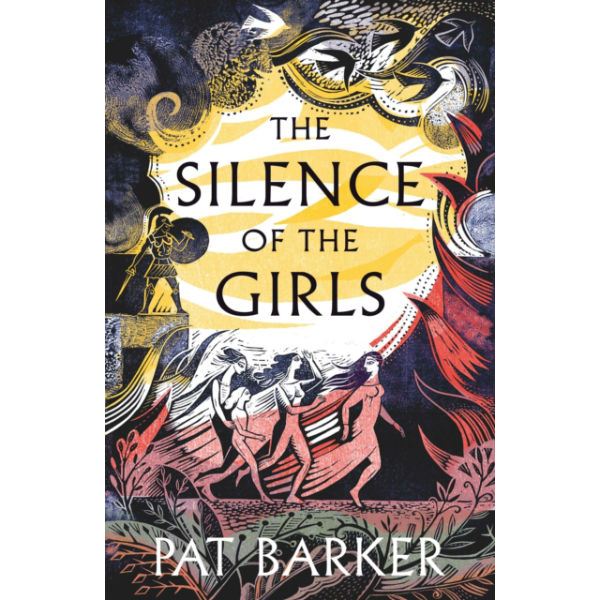 Last autumn my wife and I went to Greece to visit some of the great classical sites. I'm ashamed to say that this was my first trip to the mainland. I blogged about it here and here (and also wrote about the importance of introducing young people to the classics here).
 One of the sites we visited was Mycenae. Here, on this great citadel, Agamemnon reigned as king. Here he mustered his fighting men and led them down the valley to Nauplius from where they set sail for the Trojan War. Just below the ancient city is the mighty Bronze Age tomb built in around 1250 BCE. In the excitement of its discovery in the nineteenth century, it was at once claimed to be Agamemnon's tomb. Whether he was buried there or not, the name Agamemnon's Tomb stuck. The marvellous "Funeral Mask of Agamemnon" which was unearthed during that excavation and is now in the Archaeological Museum of Athens certainly dates from before his time.
 It's one of the most impressive monuments in Greece, a place to make you think. It takes you straight back to the Iliad, Homer's story of the Trojan War. Or, we should say, selected episodes from that nine-year conflict that was seared on the Greeks' memory and played such a vital part in framing their sense of identity and destiny. I'd taken the Iliad to Greece on my tablet, and for a few minutes I sat in front of the tomb's colossal entrance reading selected paragraphs. It was like reading the gospels in the Church of the Holy Sepulchre in Jerusalem and Galilee, or Bede's story of Saxon England in his churches at Wearmouth and Jarrow here in North East England. Context is everything.
I'd grown up with the Iliad and the Odyssey. Retold for children (Tales of the Greek Heroes), they belonged to a precious little canon of books by my bedside, endlessly re-read, that included the Arthurian Legend and Robin Hood. And launching into the classics at a boys' prep school, I suppose I imbibed the notion that these stories set out notions of ideal manhood to be emulated, as far as possible, by prowess on the rugby pitch. Agamemnon, Achilles and Ajax, Hector and Paris - who wouldn't want to grow up to be like these fine warriors who brought lustre to the blooded plains of Troy?
So far, so gendered. At Christmas I was given Pat Barker's new novel, The Silence of the Girls. I'd read her Regeneration Trilogy about the Great War, and some of her other novels. In one way, The Silence of the Girls reminded me of Regeneration: I won't say that she is the only contemporary novelist who knows how to depict war, but I will say that there are none better. I'd forgotten how visceral her writing is, how concretely she describes human trauma, how she won't let the reader evade the sordid, repellent specifics of what it is like to fight and be fought. She makes you feel the pain, not by indulging needlessly in the horror of it all, but by troubling to articulate it, write accurately about it so that you catch every jot, every tittle.
An archetypal man's world, you would think. Well, no. That's the brilliance of this novel. For it sees the Trojan War from the female perspective, as if it were told by the Trojan woman whom Achilles is given as his trophy for success in battle. Part concubine part slave, Briseis has a complicated relationship with Achilles, but that is nothing to her predicament when Agamemnon decides that he wants her for himself, to replace the woman whom he has reluctantly had to release to appease the gods. The mighty sulk this induces in Achilles and his refusal to go out and fight is the central premise of the Iliad. But it had not struck me before how this places a woman right at the heart of the epic. (Other than Helen of Sparta, of course, who was the pretext of the Trojan War to begin with.)
Reading a text like the Iliad from the standpoint of someone who is (a) an enemy, (b) a slave who is always subject to the power, not to say abuse, of another, and above all (c) a woman transforms your entire view of it. When I taught the Hebrew Bible I urged students to discover how studying familiar texts from the standpoint of oppression and marginality sheds all kinds of new light on them whether they are feminist, queer, political or postcolonial readings. The insights of liberation theology into how we read the story of the Exodus have been with us for half a century or more. I'm simply saying that as a lay person when it comes to classical literature, Pat Barker's approach was a revelation.
The Silence of the Girls - it's such an eloquent title. Are the Iliad or the Exodus texts remotely interested in listening to the voices of the women who experience the traumas narrated in those stories? But if you peer into the interstices, women are there, waiting to be heard. In Exodus, Miriam, Aaron's sister, summons the Hebrew women to sing and dance their own story of deliverance in which feminists hear a distant echo of far-off times when women would one day take their place alongside men in leading others: sing to Yahweh, for he has triumphed gloriously; horse and rider he has thrown into the sea.
And when you look again at the Iliad having read Pat Barker's novel, women are silent no longer. You realise how strong the Trojan women were, dignified, noble, intelligent, tender. Like the chorus in a Greek tragedy they notice what is happening, pay attention, interpret events, share insights about human nature. They compel you through suffering to imagine in new ways. At least, that's how I began to construe Pat Barker's Briseis. It's superbly done, with a purity of vision that you want to catch as a reader. And when you put the book down and return to the twenty-first century and the relentless conflicts of our own time, you long for the vision not to fade just yet as you try to make sense of it all.
Oh, and doing whatever it takes to make sure that women and girls are silenced no more in our own day. Pat Barker’s novel is a manifesto of empowerment, and her unforgettable Briseis an emblem for women of all times and places. But the battle for equality is not won yet!
Thursday, 17 January 2019
After the Vote: a Church of England Statement?
After the Commons vote on Mrs May’s Brexit deal on Tuesday, the Church of Scotland was quick to issue a statement.
I’ve been tracking the Church of England’s media feed since the vote, thinking that at a time of national crisis, Britain’s other national church would be bound to say something that could help people of faith - maybe others - try to reflect on the position our nation is now in. I’ve been surprised, and I have to say disappointed, that so far, there has been no official comment.
So in the absence of any statement, and conscious that it’s hard to improve on the Church of Scotland’s wise words, here’s my own attempt. The Church of England is welcome to adopt it without attribution if it wishes. And while my personal view of Brexit is well-known to readers of this blog, I’ve genuinely tried to make this comment as inclusive as possible.
The Church of England is dismayed that following this week’s vote on the Prime Minister’s Brexit deal in the House of Commons, our nation now finds itself in an impasse. And this just ten short weeks before the date we are due to leave the European Union. We cannot exaggerate the dangers this poses to the United Kingdom.
Our Church is privileged to serve one of its four nations, and this means that we care deeply about the welfare of England, its destiny, and its contribution to the flourishing of the United Kingdom, Europe and the world. Because of that, we would like to offer a comment on the position our nation is now in.
Our Church is probably no more united on Brexit than the population as a whole. This is one of many matters where the Church of England needs to live courteously with difference. But we believe, as we think most parliamentarians and most of the British public believe, that to leave the EU without any deal in place would be profoundly damaging to the UK. And we are afraid that it is the poorest and most dependent of our society who would be damaged the most. Our present paralysis is therefore a cause of great concern.
We say this out of concern not only for our future trading relationships with the EU, but also for the many other ways in which our collaboration with the European Union will continue to be of immense importance to this nation. We mean our shared concern for human rights, justice, employment practice, the alleviation of poverty, security, peacemaking and the conservation of the environment. We also mean our participation in scientific, medical, cultural and educational programmes that have benefitted all the EU nations and which we believe most people would want to see continue in some form. The UK has shown leadership in all these areas, and we would not want to see these opportunities vanish on 29 March.
We are also deeply aware of the predicament Brexit poses to our friends from overseas EU nations who have made their home in the UK, and for British people living in those EU27 nations. A “no-deal” Brexit would have a severe impact on them and on their livelihoods. We owe it to them to make sure that they have security about their future, and this lends urgency to the task of negotiating an acceptable divorce settlement and future relationships as nations.
We urge our Parliamentarians to put the nation’s welfare above party loyalties by finding every possible way of working together to find a way forward that can win consensus. This is not a time for taking up doctrinaire positions. It is not only vital that Parliament rediscovers a sense of common purpose. It is now very urgent indeed that we emerge from this current paralysis.
It has often been said that leaving the European Union does not mean leaving the continent of Europe. So we urge all the peoples of Britain to continue to be good friends, neighbours and allies to the nations of our continent, in whatever ways our future relationships are configured. This is unknown at present. But despite so much uncertainty, we urge our leaders at least to have regard for the many values the European family of nations has in common.
What can the Church of England offer at this critical time?
First, as our neighbours in the Church of Scotland have already said, we can try to model respect and courtesy in the way we ourselves as church members handle issues that deeply divide people. Archbishop Justin Welby has coined the phrase “good disagreement”. Our national conversation about Brexit has become violent and abusive at times. We must resist this, and instead embody what it means to treat one another as humans who are created in God’s image, whatever our political or religious convictions. We make our plea to all politicians and those in public leadership roles to take great care in the ways they express themselves. And this of course extends to all of us, not least in our use of social media.
Secondly, we can promise to say our prayers. This isn’t about finding answers to our political dilemmas so much as holding the nation in our hearts and offering our present cares and concerns to the God who, we believe, cares as much about continents and nations as he does about individuals. And even if prayer is not everyone’s instinctive response at such times as these, perhaps there are more people than we imagine who find comfort in the knowledge that prayer is being offered in the cathedrals and churches right across our land on behalf of us all.
Thirdly, if there are concrete ways in which the Church of England can act as bridge-builders or reconcilers at this time of uncertainty, or beyond, we stand ready to contribute in any way we can. In this, we believe we speak for Christian leaders of every tradition and in every part of the kingdom. And for all people of goodwill, whatever their faith, politics, culture or origin. Together, we can find find possibility and hope even in the most troubled of times. We pray so.
UPDATE. As I was publishing this, the Archbishops of Canterbury and York released a short statement supporting the call to prayer issued by Churches Together in Britain and Ireland (CTBI).
I’ve been tracking the Church of England’s media feed since the vote, thinking that at a time of national crisis, Britain’s other national church would be bound to say something that could help people of faith - maybe others - try to reflect on the position our nation is now in. I’ve been surprised, and I have to say disappointed, that so far, there has been no official comment.
So in the absence of any statement, and conscious that it’s hard to improve on the Church of Scotland’s wise words, here’s my own attempt. The Church of England is welcome to adopt it without attribution if it wishes. And while my personal view of Brexit is well-known to readers of this blog, I’ve genuinely tried to make this comment as inclusive as possible.
The Church of England is dismayed that following this week’s vote on the Prime Minister’s Brexit deal in the House of Commons, our nation now finds itself in an impasse. And this just ten short weeks before the date we are due to leave the European Union. We cannot exaggerate the dangers this poses to the United Kingdom.
Our Church is privileged to serve one of its four nations, and this means that we care deeply about the welfare of England, its destiny, and its contribution to the flourishing of the United Kingdom, Europe and the world. Because of that, we would like to offer a comment on the position our nation is now in.
Our Church is probably no more united on Brexit than the population as a whole. This is one of many matters where the Church of England needs to live courteously with difference. But we believe, as we think most parliamentarians and most of the British public believe, that to leave the EU without any deal in place would be profoundly damaging to the UK. And we are afraid that it is the poorest and most dependent of our society who would be damaged the most. Our present paralysis is therefore a cause of great concern.
We say this out of concern not only for our future trading relationships with the EU, but also for the many other ways in which our collaboration with the European Union will continue to be of immense importance to this nation. We mean our shared concern for human rights, justice, employment practice, the alleviation of poverty, security, peacemaking and the conservation of the environment. We also mean our participation in scientific, medical, cultural and educational programmes that have benefitted all the EU nations and which we believe most people would want to see continue in some form. The UK has shown leadership in all these areas, and we would not want to see these opportunities vanish on 29 March.
We are also deeply aware of the predicament Brexit poses to our friends from overseas EU nations who have made their home in the UK, and for British people living in those EU27 nations. A “no-deal” Brexit would have a severe impact on them and on their livelihoods. We owe it to them to make sure that they have security about their future, and this lends urgency to the task of negotiating an acceptable divorce settlement and future relationships as nations.
We urge our Parliamentarians to put the nation’s welfare above party loyalties by finding every possible way of working together to find a way forward that can win consensus. This is not a time for taking up doctrinaire positions. It is not only vital that Parliament rediscovers a sense of common purpose. It is now very urgent indeed that we emerge from this current paralysis.
It has often been said that leaving the European Union does not mean leaving the continent of Europe. So we urge all the peoples of Britain to continue to be good friends, neighbours and allies to the nations of our continent, in whatever ways our future relationships are configured. This is unknown at present. But despite so much uncertainty, we urge our leaders at least to have regard for the many values the European family of nations has in common.
What can the Church of England offer at this critical time?
First, as our neighbours in the Church of Scotland have already said, we can try to model respect and courtesy in the way we ourselves as church members handle issues that deeply divide people. Archbishop Justin Welby has coined the phrase “good disagreement”. Our national conversation about Brexit has become violent and abusive at times. We must resist this, and instead embody what it means to treat one another as humans who are created in God’s image, whatever our political or religious convictions. We make our plea to all politicians and those in public leadership roles to take great care in the ways they express themselves. And this of course extends to all of us, not least in our use of social media.
Secondly, we can promise to say our prayers. This isn’t about finding answers to our political dilemmas so much as holding the nation in our hearts and offering our present cares and concerns to the God who, we believe, cares as much about continents and nations as he does about individuals. And even if prayer is not everyone’s instinctive response at such times as these, perhaps there are more people than we imagine who find comfort in the knowledge that prayer is being offered in the cathedrals and churches right across our land on behalf of us all.
Thirdly, if there are concrete ways in which the Church of England can act as bridge-builders or reconcilers at this time of uncertainty, or beyond, we stand ready to contribute in any way we can. In this, we believe we speak for Christian leaders of every tradition and in every part of the kingdom. And for all people of goodwill, whatever their faith, politics, culture or origin. Together, we can find find possibility and hope even in the most troubled of times. We pray so.
UPDATE. As I was publishing this, the Archbishops of Canterbury and York released a short statement supporting the call to prayer issued by Churches Together in Britain and Ireland (CTBI).
Tuesday, 8 January 2019
Brexit: a Book, a Film and a Shocking Event

Let me start with three quotations. Maybe you recognise them.
Their campaign began 20 years ago. The slow drip of hate, hate, hate. This is who we are now.
It’s about the soul of our country. I’m worried that we won’t be able to heal.... You can’t close the box once it’s been opened.
We all know there's a lot of anger in this country at the moment and to get what you want you've got to keep that anger burning. But people show their anger in different ways. Some of them grumble into their tea and huff and puff over the Daily Telegraph and vote for Brexit and that's fine. But some of them go out into the street one morning with a flak jacket full of knives and stab their local MP to death, and that's not so good is it? And the more the papers stoke up the anger by using words like "treason" and "mutiny" and "enemy of the people", the more likely it gets that something like that will happen again.
The first two are from James Graham's TV drama Brexit: The Uncivil War which was broadcast on Channel Four last night. The third is from Jonathan Coe's latest novel Middle England, published last autumn. It's been interesting to watch the one and read the other in these first few days of what promises to be a febrile year.
In one way, the novel and the drama are trying to do the same thing: lift the lid on Brexit-Britain and uncover the dynamics of a referendum decision that now seems, thirty months later, to be more baffling than ever, more complex than most of us thought at the time. The TV play did this by focusing on the leadership of the Vote Leave campaign, Dominic Cummings (aka Benedict Cumberbatch) in particular. The novel, by contrast, explores the lead-up to the referendum and its aftermath through the perspective of characters ("ordinary people"?) who are linked by kindred or affinity (some of whom you will recognise from Coe's earlier novels). So far, so synchronous.
Synchronous too, and appallingly (because this was real life, not the imagined world of fiction), Anna Soubry MP was verbally assaulted yesterday in front of the Houses of Parliament. Staunch Remainer as she is, she had given a TV interview about Brexit on College Green. Some protesters - not many, but what they lacked in numbers they made up for in foul-mouthed ferocity - yelled abuse at her. Words quoted in the reports were Fascist! Nazi! There may have been more. Still on air, she asked, her voice audibly shaking, "What has happened to our country?" The book and the film go some way to answering that, as the quotes above suggest.
In her review of the film in today's Guardian Lucy Mangan colourfully pans the drama, not so much because it was simplistically black-and-white (angels versus demons), but because it didn't explore any of the main issues in depth. (And it was, to be honest, somewhat pedestrian, but maybe this was to avoid providing watching litigators with extra work.) The effect of this was to add to the chaos at precisely the time in our national life when we should look to the arts to shine a light on our confusion. But whatever its shortcomings, I have to say that the script earned two cheers for accurately spotlighting the bitter divisions that have been let loose in our country. It couldn't have wished for a better commentary than those grim events in Parliament Square on the very same day. It's completely right to fear for the soul of our country and to wonder if these wounds can be healed, in our lifetimes at any rate.
Jonathan Coe's book is a lot more satisfying. He too uncovers the "sound and fury" (alas, unlike Shakespeare's, not "signifying nothing"). But he does it through the slow burn of the long read that allows you time to reflect on the picture he's painting. This is not a campaigning novel but a serious exercise in plot, character and motive. Take Helena, She belongs to my own silver-haired generation who, if the demographic analyses are right, tipped the referendum into voting Leave. She is elegant, thoughtful, caring - but as you get to know her you discover a low-level hostility towards those who are different from her, an "othering" of people from different cultures and traditions. No spoilers - I won't reveal how this comes to a climax near the end, but it's shocking when it does. And you realise that she is your neighbour in the street where you live, the acquaintance who invites you in for coffee, the woman you kneel next to in church, a friend or relative, even, who takes you by surprise because you never thought that racism formed even the tiniest part of their character.
I loved the book. And I valued moments of the drama like those I quoted when it seemed to rise above the generally worthy and recognise something significant. Both avoided making facile connections such as: if David Cameron had not launched the referendum, Jo Cox would still be alive today. What's likely to be true is that he was foolish enough to give in to the self-destructive Rule Britannia anti-EU myth that has been perpetrated among right-wing Tories for a generation and that aided and abetted by the Daily Mail and the Daily Express, has poisoned attitudes across much of the party not to say its voters. In other words, Uncivil War is right to recognise that this visceral hatred has been dripping for a couple of decades, as Margaret Thatcher and John Major knew well. The referendum was not the cause of it. But it was the occasion for it to find open expression where hatreds are now expressed not only at the smartphone keyboard but at knifepoint. Cameron cannot evade responsibility for not reading the signs of the times. For a politician that's a sin of the first order.
How do you close the box once it's been opened? In Hesiod's myth of Pandora, she foolishly opened her box (a big clay storage jar, actually) and released all the evils we know in the world - famine, disaster, poverty, sickness and death. She shut it just in time to hold in the last of its contents which was hope. Someone read my tweet about all this today and replied: All shall be well.... Even if it is not well, and it certainly doesn't feel well at present. Yes, I thought, that is theologically and spiritually accurate.
I don't know what shape hope can have for our nation at present. I can't any more sing that naively optimistic hymn God is working his purpose out in the light of events. God is not going to rescue us from our folly. We have already seen what glory, grace and truth look like in the face of the Child whose coming we have celebrated at Christmas. But precisely because of him and his love for our chaotic world, hoping against hope is what we must do, like faithful Abraham. And pray for the wisdom that will teach us how to think and act for the best in our time.
And we shall hope. If not for ourselves, then for our children's children who, we fervently pray, inherit a better world than the one we are bequeathing them.
Friday, 4 January 2019
Farewell Facebook. Sort Of.
There's something faintly narcissistic about discussing social media on social media. But I guess we all do it if only to try to understand why, if it has, social media has become such a pervasive part of our lives.
Six years ago when I was still finding my feet in this strange new world I wrote a blog about Twitter. A week is a long time in social media, let alone six years. But I don't think I'd change anything much, other than acknowledge that the character limit is now 280, not 140 as it used to be in the (good) old days. I tried out these Twelve Principles of Responsible Tweeting on a conference I once addressed on the subject of wisdom and pastoral care. They went down well.
At about the same time as a Durham University colleague told me I'd enjoy Twitter (how right she was), my children persuaded me to reactivate my Facebook (henceforth FB) account so that we could all keep in touch, resuscitate old friendships, share holiday snaps and discuss what we'd had for breakfast. Always compliant, I did as they asked. I enjoyed interacting with people I hadn't seen for years as well as making new friends (whatever we think online "friendship" means). I learned a lot from links people posted to broadcasting, newspapers and journals, enjoyed their photos and was often inspired by their blogs.
But I never cared for FB in quite the way I took to Twitter. Twitter was elegant, disciplined and smart. I loved its minimalism - not so minimalist now. FB sprawled without limit (and by heaven don't some people take advantage of that). Twitter was amazingly simple to use, FB labyrinthine in the complexity of its settings (some of which I don't get to this day). But what irritated me most, and still does, is the gossipy world view it often endorses. The endless fripperies, the studied triviality that was once mercifully confined to the privacy of personal relationships are now on view for all the world (well, all our friendship worlds) to see.
It's not that lightening up isn't a very good thing. We should cultivate humour, laughter, lightness of touch, a sense of the absurd. We all need to do it, myself included - ask my family! But somehow, FB seems to inflate it. And that's true at the opposite end of the spectrum as well, where serious commentary (of which there's a great deal on FB - don't misunderstand me) often descends into rudeness, vitriol and rage. The more words I have, the more I can indulge myself in front of the ever-willing audience with which I share my echo-chamber. In that respect, Twitter's tightness imposes some controls. Yes I know that 280 characters, precisely because of that limit, can curtail nuance, inhibit subtlety, make words sound sharper-edged than they are meant to be, offend where no offence was intended. And if you want to abuse someone, Twitter is ideal for it. It will get you noticed. No medium is perfect. But perhaps I've said enough to explain why I've not found FB comparable to Twitter which, most of the time, has been source of enlightenment, stimulus and pleasure.
Social media holds up a mirror to both our best and our worst selves, and to the shades of grey in between which I suppose account for ninety-five percent of ordinary life. The mirror, if it's telling the truth, won't make us look any better than we really are, or worse for that matter. But the question is, precisely what "truth" are we talking about when we gaze dispassionately at the image of ourselves that we portray on social media? I find that an intriguing question to which I don't really know the answer. Some of us want to promote the image of the clown or humourist, others the sage with profound wisdom to impart. Some aspire to be the angry prophet, some the witty flaneur. There's the friend who cultivates triviality in order to subvert (or just take their mind off) the serious stuff out there in the real world or in cyberspace. And there's always the one who wants to be the cleverest person in the room. God forbid any of us might crave that reputation.
To some extent, these caricatures tell both truth and lies. We're all of us tempted to construct false selves online, create the public or semi-public persona we want others to see, may even want to see ourselves. When we draft our social media profile and select images to go with it, what governs those decisions? Some devote a good deal of time to thinking about it, others take a devil-may-care attitude. I suppose personality type has a lot to do with it, as well as the roles we have in our work or public life, and how social media can enhance or detract from them. And all this assumes that we do lhave regard for truthfulness and integrity online so that what you see is, to a greater or lesser extent, what you you get. I assume that everyone who reads this blog believes that this ought to matter to us. But even if it does, it’s easy to deceive ourselves about what the gap between how others see us and what we truly are. That’s no different from everyday life of course. But on social media, as some have found to their cost, that gap can be fatally magnified.
I have to admit that FB is not altogether the life-enhancing medium I thought it might be. But I won't have it said that social media is intrinsically destructive or bad. It's morally neutral, like the invention of the printing-press or telephone, radio and television, all of which were said at the time successfully to corrupt minds and hearts, especially those of the young. Like any communications medium, the internet is only a tool - a hugely powerful one, but a tool for all that. What any tool does is simply to broaden the scope of our capacity for good or evil. As I've said, it's as good or as bad as we are. So the important question to ask always is, how can we make it better for others and ourselves, put wholesome, positive, wise messages out there to help combat so much that's negative and deleterious and bad?
All of which I've written as a way of telling FB friends that I've decided to change the way I use this platform. Hitherto I've posted a lot of stuff about theology, culture, social affairs and politics on my timeline as well as link to some of the best writing on those or other topics that I've come across in my reading. But I've come to think that maybe FB isn't the best medium for doing this, at least not for me. Someone told me, in the nicest possible way but quite firmly, to lighten up on other people's timelines (and there I was, thinking I'd made a helpful contribution to the discussion a friend had begun in a new year's post). Maybe they were trying to tell me that FB isn't the right tool for this sort of thing, or more likely, that I just wasn't using it properly. However, the effect was to make me feel as though I'd lobbed a hand-grenade into the kindergarten playground. Over-sensitive? Maybe. Even probably. But it had the intended effect of making me think about my use of social media.
So I've reached a decision about FaceBook. It's not to suspend my account - at least, not yet (as for closing it down permanently, how to do that has baffled some of the world's greatest minds). But I've decided to use FB purely for social interaction rather than the political, social and theological debates I've been engaging in for the past few years. I'm going to restrict that kind of content to Twitter, and keep FB for what I guess it was meant to do all along, enjoying the fun-stuff with family and friends and sharing more personal joys and sorrows as appropriate. And, I hope, continuing to enlarge the circle of human relationships, some deep, some more casual, that social media is good at promoting. So I've changed all my privacy settings from public to friends only and drastically reduced what anyone can see of my life online.
In some ways it's felt bleak to do this. But it's not the parting of friends, just a new year rearrangement of the digital homes we are inhabiting. I know many of us will go on meeting up on Twitter where lively debates about everything under the sun will continue. And let me emphasise that I'm speaking only for myself and my experience. We each have to come to our own conclusions. But there's no denying that I'll miss many of you in all sorts of ways when it comes to the often controversial discussions we've had and all that I've learned from you.
I'll give it a few weeks to see how it works out. With the public exposure about its policies and practices that it's had in recent weeks, FaceBook's own hour may be coming, though it's too soon to tell if we're on board a sinking ship. It's entirely possible that events conspire to make all of us question the wisdom of continuing to associate ourselves with FB and be manipulated, as we seem to be, by the vast amounts of information it holds about us, and by the inscrutable algorithms that govern what happens to it (and to us).
When Sherlock Holmes was heading for his last encounter with Professor Moriarty at the Reichenbach Falls, a meeting he believed could only end in the deaths of them both, he told Dr Watson that he did not think he had ever used his powers of detection other than for the welfare of humanity. I’ll make the more modest claim that on FB, I’m not aware that I’ve ever intended to harm or diminish anyone else, however much we may have disagreed or been passionate about the causes we believe in. That of course is no defence if I’ve hurt anyone or damaged their reputation. But as I say a sort of farewell, I can at least say that I’m sorry. That feels important just now.
Six years ago when I was still finding my feet in this strange new world I wrote a blog about Twitter. A week is a long time in social media, let alone six years. But I don't think I'd change anything much, other than acknowledge that the character limit is now 280, not 140 as it used to be in the (good) old days. I tried out these Twelve Principles of Responsible Tweeting on a conference I once addressed on the subject of wisdom and pastoral care. They went down well.
At about the same time as a Durham University colleague told me I'd enjoy Twitter (how right she was), my children persuaded me to reactivate my Facebook (henceforth FB) account so that we could all keep in touch, resuscitate old friendships, share holiday snaps and discuss what we'd had for breakfast. Always compliant, I did as they asked. I enjoyed interacting with people I hadn't seen for years as well as making new friends (whatever we think online "friendship" means). I learned a lot from links people posted to broadcasting, newspapers and journals, enjoyed their photos and was often inspired by their blogs.
But I never cared for FB in quite the way I took to Twitter. Twitter was elegant, disciplined and smart. I loved its minimalism - not so minimalist now. FB sprawled without limit (and by heaven don't some people take advantage of that). Twitter was amazingly simple to use, FB labyrinthine in the complexity of its settings (some of which I don't get to this day). But what irritated me most, and still does, is the gossipy world view it often endorses. The endless fripperies, the studied triviality that was once mercifully confined to the privacy of personal relationships are now on view for all the world (well, all our friendship worlds) to see.
It's not that lightening up isn't a very good thing. We should cultivate humour, laughter, lightness of touch, a sense of the absurd. We all need to do it, myself included - ask my family! But somehow, FB seems to inflate it. And that's true at the opposite end of the spectrum as well, where serious commentary (of which there's a great deal on FB - don't misunderstand me) often descends into rudeness, vitriol and rage. The more words I have, the more I can indulge myself in front of the ever-willing audience with which I share my echo-chamber. In that respect, Twitter's tightness imposes some controls. Yes I know that 280 characters, precisely because of that limit, can curtail nuance, inhibit subtlety, make words sound sharper-edged than they are meant to be, offend where no offence was intended. And if you want to abuse someone, Twitter is ideal for it. It will get you noticed. No medium is perfect. But perhaps I've said enough to explain why I've not found FB comparable to Twitter which, most of the time, has been source of enlightenment, stimulus and pleasure.
Social media holds up a mirror to both our best and our worst selves, and to the shades of grey in between which I suppose account for ninety-five percent of ordinary life. The mirror, if it's telling the truth, won't make us look any better than we really are, or worse for that matter. But the question is, precisely what "truth" are we talking about when we gaze dispassionately at the image of ourselves that we portray on social media? I find that an intriguing question to which I don't really know the answer. Some of us want to promote the image of the clown or humourist, others the sage with profound wisdom to impart. Some aspire to be the angry prophet, some the witty flaneur. There's the friend who cultivates triviality in order to subvert (or just take their mind off) the serious stuff out there in the real world or in cyberspace. And there's always the one who wants to be the cleverest person in the room. God forbid any of us might crave that reputation.
To some extent, these caricatures tell both truth and lies. We're all of us tempted to construct false selves online, create the public or semi-public persona we want others to see, may even want to see ourselves. When we draft our social media profile and select images to go with it, what governs those decisions? Some devote a good deal of time to thinking about it, others take a devil-may-care attitude. I suppose personality type has a lot to do with it, as well as the roles we have in our work or public life, and how social media can enhance or detract from them. And all this assumes that we do lhave regard for truthfulness and integrity online so that what you see is, to a greater or lesser extent, what you you get. I assume that everyone who reads this blog believes that this ought to matter to us. But even if it does, it’s easy to deceive ourselves about what the gap between how others see us and what we truly are. That’s no different from everyday life of course. But on social media, as some have found to their cost, that gap can be fatally magnified.
I have to admit that FB is not altogether the life-enhancing medium I thought it might be. But I won't have it said that social media is intrinsically destructive or bad. It's morally neutral, like the invention of the printing-press or telephone, radio and television, all of which were said at the time successfully to corrupt minds and hearts, especially those of the young. Like any communications medium, the internet is only a tool - a hugely powerful one, but a tool for all that. What any tool does is simply to broaden the scope of our capacity for good or evil. As I've said, it's as good or as bad as we are. So the important question to ask always is, how can we make it better for others and ourselves, put wholesome, positive, wise messages out there to help combat so much that's negative and deleterious and bad?
All of which I've written as a way of telling FB friends that I've decided to change the way I use this platform. Hitherto I've posted a lot of stuff about theology, culture, social affairs and politics on my timeline as well as link to some of the best writing on those or other topics that I've come across in my reading. But I've come to think that maybe FB isn't the best medium for doing this, at least not for me. Someone told me, in the nicest possible way but quite firmly, to lighten up on other people's timelines (and there I was, thinking I'd made a helpful contribution to the discussion a friend had begun in a new year's post). Maybe they were trying to tell me that FB isn't the right tool for this sort of thing, or more likely, that I just wasn't using it properly. However, the effect was to make me feel as though I'd lobbed a hand-grenade into the kindergarten playground. Over-sensitive? Maybe. Even probably. But it had the intended effect of making me think about my use of social media.
So I've reached a decision about FaceBook. It's not to suspend my account - at least, not yet (as for closing it down permanently, how to do that has baffled some of the world's greatest minds). But I've decided to use FB purely for social interaction rather than the political, social and theological debates I've been engaging in for the past few years. I'm going to restrict that kind of content to Twitter, and keep FB for what I guess it was meant to do all along, enjoying the fun-stuff with family and friends and sharing more personal joys and sorrows as appropriate. And, I hope, continuing to enlarge the circle of human relationships, some deep, some more casual, that social media is good at promoting. So I've changed all my privacy settings from public to friends only and drastically reduced what anyone can see of my life online.
In some ways it's felt bleak to do this. But it's not the parting of friends, just a new year rearrangement of the digital homes we are inhabiting. I know many of us will go on meeting up on Twitter where lively debates about everything under the sun will continue. And let me emphasise that I'm speaking only for myself and my experience. We each have to come to our own conclusions. But there's no denying that I'll miss many of you in all sorts of ways when it comes to the often controversial discussions we've had and all that I've learned from you.
I'll give it a few weeks to see how it works out. With the public exposure about its policies and practices that it's had in recent weeks, FaceBook's own hour may be coming, though it's too soon to tell if we're on board a sinking ship. It's entirely possible that events conspire to make all of us question the wisdom of continuing to associate ourselves with FB and be manipulated, as we seem to be, by the vast amounts of information it holds about us, and by the inscrutable algorithms that govern what happens to it (and to us).
When Sherlock Holmes was heading for his last encounter with Professor Moriarty at the Reichenbach Falls, a meeting he believed could only end in the deaths of them both, he told Dr Watson that he did not think he had ever used his powers of detection other than for the welfare of humanity. I’ll make the more modest claim that on FB, I’m not aware that I’ve ever intended to harm or diminish anyone else, however much we may have disagreed or been passionate about the causes we believe in. That of course is no defence if I’ve hurt anyone or damaged their reputation. But as I say a sort of farewell, I can at least say that I’m sorry. That feels important just now.
Saturday, 29 December 2018
Quirinius Lives: the Home Office Says “Register!”
Someone in high places wasn't paying attention when their Home Office video was launched on the Third Day of Christmas. It was early in the morning of the 27 December, the first tweet out of the Home Office after wishing everyone a happy Christmas. If you haven't heard, this is the video that tells citizens from the 27 overseas EU countries who want to go on living in the UK after Brexit how to set about applying. "EU citizens and their families will need to apply to the EU Settlement Scheme to continue living in the UK after 31 December 2020" it says. It takes 55 seconds to watch.
It's deeply ironic that this video should have been released during the twelve days of Christmas. Only a few days earlier, more than half the nation must have heard St Luke's account of the birth of Jesus read at thousands of nativity plays, crib blessings, Christingles and carol services. In those days a decree went out from Emperor Augustus that all the world should be registered. This was the first registration and was taken while Quirinius was governor of Syria. In the ancient world you had to fit in with the requirements of a process-driven bureaucracy. Plus ca change. So Joseph and Mary have to make the arduous journey from Nazareth to Bethlehem, she nine months pregnant. They get there only to find there is no room at the inn. You know how the story continues.
So around 3.2 million people will need to register before 2021. That's a lot more form-filling than even dreary Quirinius could have dreamed of. Who doesn't love a good registration? What better excuse for a public holiday? Better still if you can anticipate government coffers swelling with unbudgeted income from it, for many of our EU27 friends will have to pay for the privilege of registering. I don't know if this was entirely clear to them before.
Predictably the video has been greeted with responses ranging from eye-rolling boredom (what did you expect from the Home Office?) through mockery and sarcasm to outright fury. Most striking has been the outrage of many people from EU27 countries who have lived in Britain for decades and thought this was their home. The Guardian quotes one: "You absolute s***! I've lived here 35 years, got a stamp in my passport for indefinite leave to remain in 1985 and now you want me to apply to stay in my own home." This from a Danish citizen who lives in the UK. And this which came up on my own Twitter feed: "Wow. This is making me feel so welcome, after 28 years of life here, making friends, paying taxes, bringing up two wonderful British citizens. Thank you so much for this slap in the face, UK Home Office. Absolutely sickening".
But I've also been struck by the responses of British citizens. "Seeing the impact of this policy on people I know and work with is a wake up call. I feel angry and ashamed" writes one. "I too am ashamed. I feel that I don’t belong here. We are not a civilised nation and the government does not represent anything I believe in" writes another. And this: "Making those who share a citizenship with us register as if they were aliens is quite shocking. Now we describe a few hundred refugees arriving at Dover as a national crisis and debate whether or not we should be rescuing them".
That last remark gets to the heart of the matter. The point about registration, which will not have been lost on Mary and Joseph, is that you are made to feel that your homeland isn't your own any more. It's been taken over by others, occupied by people who think they can control you by insisting that you comply with their requirements. My Jewish mother and her family knew all about this in Germany in the 1930s under the Nazis, and the creeping subjugation of the Jewish community by what might have seemed at first to be harmless bureaucratic processes of "registration". In Roman-occupied Judea, registration was a device to keep a potentially restless population in its place. (Never mind that there's some historical difficulty about Luke's account of this event - what we do know about Quirinius is that he was appointed as Imperial legate early in the first century precisely to oversee an exercise of this kind, even though the dates don't fit Luke's chronology. The nativity story still makes a powerful point about the two kinds of authority that are always at work in the world and confronting each other - human and divine, or we might say, the politics of God and the politics of human beings. Or maybe justification by faith or registration.)
I tweeted about this yesterday: "Like the registration when Quirinius was governor of Syria. It reminded the Holy Family that they lived in an occupied land. Precisely how Brexit Britain now is for all true Europeans, whether from the UK or an EU27country". That didn't please one of my followers who wanted to know in what sense the UK today is like first century Roman-occupied Judea. Who is doing the occupying he asked? "Our worst selves" I replied. We are doing this to ourselves and one another. Somewhere, out of the shadow side of our nation has come this self-destructive instinct to "take back control" in ways that distance us, even cut us off from the neighbour we are commanded to love. For reasons I don't pretend to understand, we have come to a time in our history when demons of suspicion, resentment and hostility are being unleashed in our “othering” of those who only wish us well. In terms of our collective national psyche, a spirit is abroad that threatens a healthy sense of our identity, who we are and who we aspire to be as good human beings. This is the occupying power. And it seems to have us in its thrall.
This may seem strong language. Perhaps I'm more coloured than I should be by my family's experience of the 1930s. But how could I not be? But for Britain's welcome to Jewish refugees at that time, my mother would not have survived the Holocaust and I wouldn't be here now. I can feel viscerally the effect of becoming like an exile in my own country, ill at ease, sorry, ashamed. This is not the kind, just, generous, fair-minded nation I thought I lived in. At least, not in this respect. I think many of the Windrush generation will say the same. It's not easy to sing the Lord's song in this strange land.
It's still Christmas. We are still celebrating the wonderful events that followed Quirinius' (or whoever's) registration. Incarnation, God's coming among us as a vulnerable holy human Child is wisdom's answer to the follies of mortals. The Infant of Bethlehem brings hope to our world and promises to deliver us from this occupation we are experiencing by our worst selves. I was heartened by a positive reply to my despondent Quirinius tweet. "I too sometimes feel that it isn’t my country any longer. Then I speak to one or more of the many wonderful people I know, and I am reminded that recovery is both possible and necessary."
We look into one another's faces and glimpse reflected there what we see when we look into the face of God’s Incarnate Son. What we see is nothing less than grace and truth. So my prayer is that we shall all be guided by divine grace and truth into better days in the new year that is dawning. And that grace and truth may free us from all that demeans human life by teaching us to look on our neighbours not as strangers but as friends whom we love with something like the love with which God loves each of us.
It's deeply ironic that this video should have been released during the twelve days of Christmas. Only a few days earlier, more than half the nation must have heard St Luke's account of the birth of Jesus read at thousands of nativity plays, crib blessings, Christingles and carol services. In those days a decree went out from Emperor Augustus that all the world should be registered. This was the first registration and was taken while Quirinius was governor of Syria. In the ancient world you had to fit in with the requirements of a process-driven bureaucracy. Plus ca change. So Joseph and Mary have to make the arduous journey from Nazareth to Bethlehem, she nine months pregnant. They get there only to find there is no room at the inn. You know how the story continues.
So around 3.2 million people will need to register before 2021. That's a lot more form-filling than even dreary Quirinius could have dreamed of. Who doesn't love a good registration? What better excuse for a public holiday? Better still if you can anticipate government coffers swelling with unbudgeted income from it, for many of our EU27 friends will have to pay for the privilege of registering. I don't know if this was entirely clear to them before.
Predictably the video has been greeted with responses ranging from eye-rolling boredom (what did you expect from the Home Office?) through mockery and sarcasm to outright fury. Most striking has been the outrage of many people from EU27 countries who have lived in Britain for decades and thought this was their home. The Guardian quotes one: "You absolute s***! I've lived here 35 years, got a stamp in my passport for indefinite leave to remain in 1985 and now you want me to apply to stay in my own home." This from a Danish citizen who lives in the UK. And this which came up on my own Twitter feed: "Wow. This is making me feel so welcome, after 28 years of life here, making friends, paying taxes, bringing up two wonderful British citizens. Thank you so much for this slap in the face, UK Home Office. Absolutely sickening".
But I've also been struck by the responses of British citizens. "Seeing the impact of this policy on people I know and work with is a wake up call. I feel angry and ashamed" writes one. "I too am ashamed. I feel that I don’t belong here. We are not a civilised nation and the government does not represent anything I believe in" writes another. And this: "Making those who share a citizenship with us register as if they were aliens is quite shocking. Now we describe a few hundred refugees arriving at Dover as a national crisis and debate whether or not we should be rescuing them".
That last remark gets to the heart of the matter. The point about registration, which will not have been lost on Mary and Joseph, is that you are made to feel that your homeland isn't your own any more. It's been taken over by others, occupied by people who think they can control you by insisting that you comply with their requirements. My Jewish mother and her family knew all about this in Germany in the 1930s under the Nazis, and the creeping subjugation of the Jewish community by what might have seemed at first to be harmless bureaucratic processes of "registration". In Roman-occupied Judea, registration was a device to keep a potentially restless population in its place. (Never mind that there's some historical difficulty about Luke's account of this event - what we do know about Quirinius is that he was appointed as Imperial legate early in the first century precisely to oversee an exercise of this kind, even though the dates don't fit Luke's chronology. The nativity story still makes a powerful point about the two kinds of authority that are always at work in the world and confronting each other - human and divine, or we might say, the politics of God and the politics of human beings. Or maybe justification by faith or registration.)
I tweeted about this yesterday: "Like the registration when Quirinius was governor of Syria. It reminded the Holy Family that they lived in an occupied land. Precisely how Brexit Britain now is for all true Europeans, whether from the UK or an EU27country". That didn't please one of my followers who wanted to know in what sense the UK today is like first century Roman-occupied Judea. Who is doing the occupying he asked? "Our worst selves" I replied. We are doing this to ourselves and one another. Somewhere, out of the shadow side of our nation has come this self-destructive instinct to "take back control" in ways that distance us, even cut us off from the neighbour we are commanded to love. For reasons I don't pretend to understand, we have come to a time in our history when demons of suspicion, resentment and hostility are being unleashed in our “othering” of those who only wish us well. In terms of our collective national psyche, a spirit is abroad that threatens a healthy sense of our identity, who we are and who we aspire to be as good human beings. This is the occupying power. And it seems to have us in its thrall.
This may seem strong language. Perhaps I'm more coloured than I should be by my family's experience of the 1930s. But how could I not be? But for Britain's welcome to Jewish refugees at that time, my mother would not have survived the Holocaust and I wouldn't be here now. I can feel viscerally the effect of becoming like an exile in my own country, ill at ease, sorry, ashamed. This is not the kind, just, generous, fair-minded nation I thought I lived in. At least, not in this respect. I think many of the Windrush generation will say the same. It's not easy to sing the Lord's song in this strange land.
It's still Christmas. We are still celebrating the wonderful events that followed Quirinius' (or whoever's) registration. Incarnation, God's coming among us as a vulnerable holy human Child is wisdom's answer to the follies of mortals. The Infant of Bethlehem brings hope to our world and promises to deliver us from this occupation we are experiencing by our worst selves. I was heartened by a positive reply to my despondent Quirinius tweet. "I too sometimes feel that it isn’t my country any longer. Then I speak to one or more of the many wonderful people I know, and I am reminded that recovery is both possible and necessary."
We look into one another's faces and glimpse reflected there what we see when we look into the face of God’s Incarnate Son. What we see is nothing less than grace and truth. So my prayer is that we shall all be guided by divine grace and truth into better days in the new year that is dawning. And that grace and truth may free us from all that demeans human life by teaching us to look on our neighbours not as strangers but as friends whom we love with something like the love with which God loves each of us.
Thursday, 27 December 2018
On Not Feeling God: thoughts on a saying of Sister Wendy Beckett
Sister Wendy Beckett has died. She was a remarkable woman. Her obituary in the Guardian paid tribute to her insight into great art and her ability to excite and inspire a television audience. Perhaps no one was more surprised than she was that a catholic nun could become such a TV success.
The obituarist ends with a striking reference to her understanding of religious experience. Her views on God were challenging. When asked once what she felt about God, she replied, sharply: “I don’t think anyone can feel God. Those who believe in him most are most aware of his non-feelability, as it were. God is such a total mystery. My heart sinks when the word God is bandied around glibly.”
I put that quote out on social media and was surprised how much interest it aroused. A lot of people endorsed it and recirculated it. Clearly Sister Wendy spoke for them in some important way. And the more I thought about it, the more I sensed that she was articulating my own thoughts too. I can’t speak for anyone else. But let me try to think aloud about why her words seem not only accurate but important.
I’m one of those people who is easily moved to tears, whether it’s a film I’m watching, a poem I’m reading or a piece of music I’m listening to. And yes, by singing carols at Christmas and gazing into the crib. I’m grateful for the capacity to feel and to be moved: I understand what the desert fathers meant when they spoke about “the gift of tears”.
And yet, I don’t altogether trust my emotional responses. I don’t mean the fact of them, rather, what they mean. Just because I feel a lump in the throat during the final scene of my favourite film Brief Encounter, it doesn’t follow that my response is especially deep or life-changing. It could be sentimental or nostalgic, none the worse for that perhaps but not to be invested with profound significance. Feelings and moods are very transient. We shouldn’t assign more meaning to them than they deserve. The actor Simon Callow once said, “the important thing is not to feel deeply but to feel accurately”.
In particular, I’m wary of assigning divine significance to my emotions. Of course, God is as present in my emotional life as he is to every other aspect of my being: he is in my thoughts, my memories, my actions, my instincts and my emotions. He is as much in my heart as in my head, as much in my feeling as in my thinking and doing. How could it be otherwise if God truly is the ground of all our being?
But I’m increasingly reticent about claiming to experience “the divine” in some direct, extraordinary way. It’s true that numinous places can move me profoundly, places that seem to speak of the Mysterium Tremens et Fascinans, as Rudolph Otto described it in his famous book The Idea of the Holy. In the past few months I’ve been touched in that way by the Ancient Greek site at Delphi, by praying quietly in Hexham Abbey one morning, by listening to Bach’s Christmas Oratorio, hearing my wife read a poem by R.S. Thomas, and by singing “Away in a Manger” with my grandchildren at the Christingle Service. These have all been, for me, religious experiences. Each has been a gift in its own way. You will I’m sure be able to speak in a similar way about the experiences that you will want to describe as “religious”.
But far from leading me to claim that I’m somehow “feeling the presence of God”, I think I want to acknowledge how much more mysterious God seems to be precisely on account of these experiences and others like them. If God is, as theologians say, immanent within our world of experience, then I’d be wrong to privilege one kind of experience as somehow more religious than any other. The real test of how authentic my faith is has to be how far I’m able to speak about God as present within my ordinary, everyday experience, and especially within those experiences that are difficult or baffling or painful. For if I can’t give some account of where God is to be found in the shadow side of my life, then it’s questionable whether I’ve come to understand God as embracing the whole of who I am, the dark, the light and all the greyscale in between. To “feel after God and find him” is indeed the goal of human existence as St Paul said on the Areopagus (Acts 17). But for me, that’s a rather different thing from “feeling him” directly.
As a Christian, I was shaped in my teenage years by evangelicalism. I owe it a tremendous amount and am glad to acknowledge that debt. But as I look back, I realise that it was too definite about God’s presence and how a born-again soul should expect to experience it, too black-and-white about the endless complexities of human life. I’m learning - and I think this is wisdom - that trusting my experience is important, and that the essence of a healthy spirituality is to be able to reflect on it in wholesome ways. But I’m also learning that when we are in the presence, as we always are, of the profoundest mystery of life, which is what God ultimately is, then my experience is only an indicator of my personal response at the time, not some clue to the riddle of the universe. I might once have claimed such a thing in the face of goodness, truth or beauty. But I’m more reticent now. Practising “reserve” feels important.
Someone asked me today what I made of the Incarnation and whether beholding God’s grace and truth in the face of the Word made flesh didn’t open a door to “feeling God” in our own sensory experience. I replied: For me, what I *feel* when beholding God’s grace & truth in the Incarnation is adoration, gladness, contrition & love. That’s a more reliable (& humble) statement than anything I could say about “feeling God”, though it’s incontestably true to say we believe he is fully present. That may seem a trifle tentative. But I think it’s important only to speak of what we know. The thing about Mystery is that it’s essentially unknowable in its fullness. Which is why, when Moses found himself in its presence at the burning bush, he could only be silent and adore. Could it be that learn this best from art, poetry and literature with their capacity to help us grasp symbolism and metaphor, “tell it slant” as Emily Dickinson said in one of her poems?
Which is why Wendy Beckett speaks for me. And yes, my heart sinks too when the word God is bandied about glibly as I’m afraid it so often is by people who should know better. I’m ill at ease with the kind of talk that pretends to know what God is doing in the world and in the church when my experience tells me that the truth is altogether more mysterious, and more wonderful, than I can ever glimpse. This God who “plants his footsteps on the sea and rides upon the storm” is not one who is susceptible to being described or understood by my feeble sense. As C.S. Lewis put it, Aslan is not a tame lion.
Wednesday, 26 December 2018
Something The Queen Said: Thoughts on Christmas Faith and Life
As I listened to The Queen on Christmas Day, a couple of sentences stood out for me. The Christmas story retains its appeal since it doesn’t provide theoretical explanations for the puzzles of life. Instead it’s about the birth of a child and the hope that birth two thousand years ago brought to the world.
In old age, Her Majesty has been increasingly clear with us all about the central place Christianity occupies in her life. It’s heartening to hear her speak about the power her Christian faith has had throughout her long life to motivate, inspire and give meaning.
But this statement I’ve highlighted goes beyond personal testimony to offer a really important insight about how religious faith does and doesn’t function in human life. The temptation is to look to faith to explain things, probe the complex mysteries of existence, come up with answers to all that baffles and bewilders us in our human experience.
Once upon a time we spoke of a “God of the gaps”, the deity whose existence provided accounts of phenomena that had so far eluded human explanation. Literal readings of the Bible provided ready resources for explaining the nature of the cosmos, the origins of life, the phenomenon of humanity, and the fact of suffering and pain. For many people, they still do, as we can see in the conservative evangelical right of North America for whom the scriptures provide the infallible answer to every question posed by science, ethics and faith.
The urge to explain extended to the arguments for the existence of God himself. I was taught philosophy at Oxford by Anthony Kenny who later became Master of Balliol which was my college. Kenny had trained and practised as a catholic priest but left the priesthood on account of his questioning the intellectual basis of dogmatic religion. His lectures on the arguments for the existence of God comprehensively dismantled one by one the philosophical bases of the classical “Five Ways”. Yet he was careful to say that this didn’t mean that God did not exist. You could no more prove his non-existence than his existence. Whatever affirmation you made about God essentially came down to faith, not logic or evidence. To speak of “explanation”, you could say, was to commit a “category mistake”. Rational explanation and religious faith belong to different “language games”.
I’ve spent a lifetime getting to know the wisdom literature of the Hebrew Bible. I’ve taught it to theology students and preached it to Sunday morning congregations. Above all, I’ve found that it’s immeasurably enriched my personal understanding of faith and the human condition. I’ve learned how agnostic books like Job and Ecclesiastes are when it comes to explaining the riddles of the world and of my own self. Whereas conventional religion likes binaries and causal explanations: right and wrong, good and evil, light and dark, reward and punishment, these writings probe deeper beneath the surface of things. They seem to discern that complexity will not be reduced to a simplistic “yes” or “no”. On the contrary. It takes faith to live with the reality of suffering (Job) or with a sense of ennui or meaninglessness (Ecclesiastes). These texts do not offer “solutions”, “theoretical explanations for the puzzles of life” to quote Her Majesty. It’s faith, not rational thought, that enables us to live with these great unanswered questions. “The fear of the Lord, that is wisdom” says Job.
Theologians calls the exploration of faith in the light of the problems of suffering and meaning theodicy. Theodicy can’t offer watertight explanations, and doesn’t try - at least, not any more. What it does is to explore ways in which faith can be understood and presented intelligently in precisely the kind of world we all know we live in, full of paradox and contradiction. This is necessary because for many, it’s questions of suffering and meaning that are a major obstacle to belief. “How can a God of love exist in a world that is so cruel and pain-ridden?” We aren’t being true to our own faith if we don’t feel the force of this question. Theodicy can help sensitise our faith to such questioning, help us articulate it in ways that place suffering and questions about meaning at the centre where they belong, rather than at the margins.
Theologians calls the exploration of faith in the light of the problems of suffering and meaning theodicy. Theodicy can’t offer watertight explanations, and doesn’t try - at least, not any more. What it does is to explore ways in which faith can be understood and presented intelligently in precisely the kind of world we all know we live in, full of paradox and contradiction. This is necessary because for many, it’s questions of suffering and meaning that are a major obstacle to belief. “How can a God of love exist in a world that is so cruel and pain-ridden?” We aren’t being true to our own faith if we don’t feel the force of this question. Theodicy can help sensitise our faith to such questioning, help us articulate it in ways that place suffering and questions about meaning at the centre where they belong, rather than at the margins.
Christmas gives us a glimpse of this way of believing. We hear afresh the story of the Holy Child of Bethlehem, we sing carols of love and praise, we gaze with wonder into his crib and are perhaps surprised to find ourselves profoundly moved by this image of a birth that brings such a joy and such a hope. This is to say that the the instinct of Christmas faith is contemplative. We look as if through an open door into a world that for a brief moment grants a vision of what life could become. We find ourselves gazing on a transformed world and a transfigured life. “Peace on earth, good will to all people!” we sing in tune with the angels. If only it were true! we say longingly to ourselves.
The Christmas story itself embraces this longing for a world healed of its wrongs. “No room at the inn” speaks of exclusion and hardship. The flight into Egypt presents the Holy Family as exiles seeking asylum in a strange land. Herod’s massacre of the innocent children depicts the suffering of innocent victims in the most terrible way possible. “The holly bears a berry as red as any blood”, indeed. Theodicy is at the very heart of our Christmas story and the carols we love to sing.
And yet contemplative faith intuits that the greatest mystery in the universe is not suffering but love. It’s love that defies all explanation, other than that this is simply how God is in himself. This is what we understand in a life-changing way is the deepest truth of Christmas. St Francis understood this, which is why he set up the first Christmas Crib and invited people to bring to it their heart’s love. Christmas becomes real for each of us as we give ourselves to this rapturous vision, and it becomes real for our world, by anticipation, as we each live out the hope that is set before us in ways that make a difference to the lives of others, whether it’s in politics, peace-making or the pursuit of social justice. As the medieval spiritual guides understood so well, holy contemplation always leads to good action. And that’s what changes things.
The Christmas story itself embraces this longing for a world healed of its wrongs. “No room at the inn” speaks of exclusion and hardship. The flight into Egypt presents the Holy Family as exiles seeking asylum in a strange land. Herod’s massacre of the innocent children depicts the suffering of innocent victims in the most terrible way possible. “The holly bears a berry as red as any blood”, indeed. Theodicy is at the very heart of our Christmas story and the carols we love to sing.
And yet contemplative faith intuits that the greatest mystery in the universe is not suffering but love. It’s love that defies all explanation, other than that this is simply how God is in himself. This is what we understand in a life-changing way is the deepest truth of Christmas. St Francis understood this, which is why he set up the first Christmas Crib and invited people to bring to it their heart’s love. Christmas becomes real for each of us as we give ourselves to this rapturous vision, and it becomes real for our world, by anticipation, as we each live out the hope that is set before us in ways that make a difference to the lives of others, whether it’s in politics, peace-making or the pursuit of social justice. As the medieval spiritual guides understood so well, holy contemplation always leads to good action. And that’s what changes things.
The traditional Gospel reading on Christmas Day says it all. “And we beheld his glory, glory as of the only-begotten of the Father, full of grace and truth” (John 1.14). We beheld. This is what the Incarnation invites us to do: to look, to see, to behold. For as we gaze into the face of the Love that makes its dwelling among us, as we are drawn into the grace and truth we see there, we instinctively understand that here is the source of all that is life-changing. Those sterile causal explanations we once hankered after don’t belong here, have no relevance to this vision of God. The Queen was right about that. What matters is leaning to become contemplatively wise, discovering how this way of life becomes a source of inspiration and strength as we try to do God’s work in the world.
When religious faith comes of age and renounces its need to explain, turns instead to contemplation, and then acts on what it has glimpsed, it achieves a state of wisdom which is both life-changing and brings hope to the world.
Subscribe to:
Posts (Atom)