About Me

My photo
Pilgrim, priest and ponderer. European living in North East England. Retired parish priest, theological educator, cathedral precentor and dean.
Showing posts with label Iliad. Show all posts

Tuesday, 22 January 2019

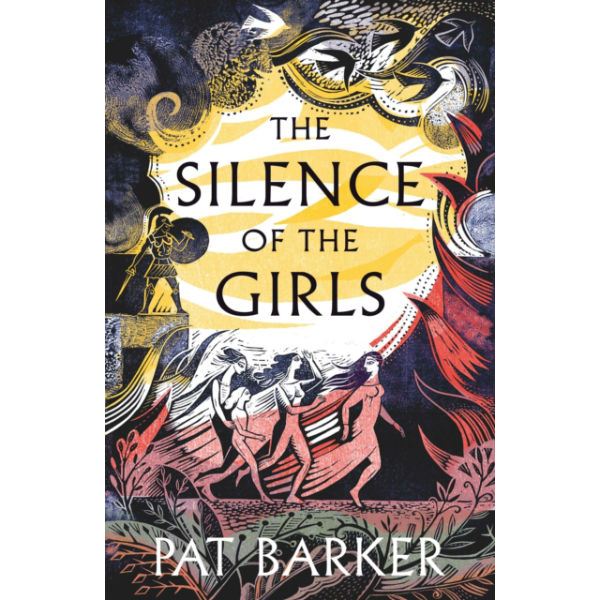
The Silence of the Girls

Last autumn my wife and I went to Greece to visit some of the great classical sites. I'm ashamed to say that this was my first trip to the mainland. I blogged about it here and here (and also wrote about the importance of introducing young people to the classics here).

One of the sites we visited was Mycenae. Here, on this great citadel, Agamemnon reigned as king. Here he mustered his fighting men and led them down the valley to Nauplius from where they set sail for the Trojan War. Just below the ancient city is the mighty Bronze Age tomb built in around 1250 BCE. In the excitement of its discovery in the nineteenth century, it was at once claimed to be Agamemnon's tomb. Whether he was buried there or not, the name Agamemnon's Tomb stuck. The marvellous "Funeral Mask of Agamemnon" which was unearthed during that excavation and is now in the Archaeological Museum of Athens certainly dates from before his time.

It's one of the most impressive monuments in Greece, a place to make you think. It takes you straight back to the Iliad, Homer's story of the Trojan War. Or, we should say, selected episodes from that nine-year conflict that was seared on the Greeks' memory and played such a vital part in framing their sense of identity and destiny. I'd taken the Iliad to Greece on my tablet, and for a few minutes I sat in front of the tomb's colossal entrance reading selected paragraphs. It was like reading the gospels in the Church of the Holy Sepulchre in Jerusalem and Galilee, or Bede's story of Saxon England in his churches at Wearmouth and Jarrow here in North East England. Context is everything.

I'd grown up with the Iliad and the Odyssey. Retold for children (Tales of the Greek Heroes), they belonged to a precious little canon of books by my bedside, endlessly re-read, that included the Arthurian Legend and Robin Hood. And launching into the classics at a boys' prep school, I suppose I imbibed the notion that these stories set out notions of ideal manhood to be emulated, as far as possible, by prowess on the rugby pitch. Agamemnon, Achilles and Ajax, Hector and Paris - who wouldn't want to grow up to be like these fine warriors who brought lustre to the blooded plains of Troy?

So far, so gendered. At Christmas I was given Pat Barker's new novel, The Silence of the Girls. I'd read her Regeneration Trilogy about the Great War, and some of her other novels. In one way, The Silence of the Girls reminded me of Regeneration: I won't say that she is the only contemporary novelist who knows how to depict war, but I will say that there are none better. I'd forgotten how visceral her writing is, how concretely she describes human trauma, how she won't let the reader evade the sordid, repellent specifics of what it is like to fight and be fought. She makes you feel the pain, not by indulging needlessly in the horror of it all, but by troubling to articulate it, write accurately about it so that you catch every jot, every tittle.

An archetypal man's world, you would think. Well, no. That's the brilliance of this novel. For it sees the Trojan War from the female perspective, as if it were told by the Trojan woman whom Achilles is given as his trophy for success in battle. Part concubine part slave, Briseis has a complicated relationship with Achilles, but that is nothing to her predicament when Agamemnon decides that he wants her for himself, to replace the woman whom he has reluctantly had to release to appease the gods. The mighty sulk this induces in Achilles and his refusal to go out and fight is the central premise of the Iliad. But it had not struck me before how this places a woman right at the heart of the epic. (Other than Helen of Sparta, of course, who was the pretext of the Trojan War to begin with.)

Reading a text like the Iliad from the standpoint of someone who is (a) an enemy, (b) a slave who is always subject to the power, not to say abuse, of another, and above all (c) a woman transforms your entire view of it. When I taught the Hebrew Bible I urged students to discover how studying familiar texts from the standpoint of oppression and marginality sheds all kinds of new light on them whether they are feminist, queer, political or postcolonial readings. The insights of liberation theology into how we read the story of the Exodus have been with us for half a century or more. I'm simply saying that as a lay person when it comes to classical literature, Pat Barker's approach was a revelation.

The Silence of the Girls - it's such an eloquent title. Are the Iliad or the Exodus texts remotely interested in listening to the voices of the women who experience the traumas narrated in those stories? But if you peer into the interstices, women are there, waiting to be heard. In Exodus, Miriam, Aaron's sister, summons the Hebrew women to sing and dance their own story of deliverance in which feminists hear a distant echo of far-off times when women would one day take their place alongside men in leading others: sing to Yahweh, for he has triumphed gloriously; horse and rider he has thrown into the sea.

And when you look again at the Iliad having read Pat Barker's novel, women are silent no longer. You realise how strong the Trojan women were, dignified, noble, intelligent, tender. Like the chorus in a Greek tragedy they notice what is happening, pay attention, interpret events, share insights about human nature. They compel you through suffering to imagine in new ways. At least, that's how I began to construe Pat Barker's Briseis. It's superbly done, with a purity of vision that you want to catch as a reader. And when you put the book down and return to the twenty-first century and the relentless conflicts of our own time, you long for the vision not to fade just yet as you try to make sense of it all.

Oh, and doing whatever it takes to make sure that women and girls are silenced no more in our own day. Pat Barker’s novel is a manifesto of empowerment, and her unforgettable Briseis an emblem for women of all times and places. But the battle for equality is not won yet!

Wednesday, 5 December 2018

The Classics Are For All

This was the year I finally got to see this amazing sight. Why has it taken me sixty-eight years to visit mainland Greece and see the Parthenon, Delphi, Olympia, Mycenae and other legendary places whose names are so familiar to anyone who treasures classical antiquity? I wrote a couple of blogs as I tried to reflect on what became for me a real pilgrimage and journey of discovery (you can find my thoughts here and here).

Never one to be without something to read, I'd downloaded the Iliad on my tablet and from time to time turned to it during the trip. It was decades since I had last immersed myself in this epic tale of the Trojan War. I guess you have to have lived for a while if you're going to see beneath the surface of the text and grasp something of what Homer was trying to convey about human life that gives this epic poem universal significance. I'm not saying I've "got it" yet (but Adam Nicholson's book Why Homer Matters was an enjoyable read just before we set out for Athens). But it was undeniably momentous to sit outside Agamemnon's tomb at Mycenae and read from it. I'll never forget it.

In Greece I found myself reminiscing about childhood. One of the earliest Puffin Books I remember reading was Roger Lancelyn Green's Tales of the Greek Heroes (which you can now get in a beautiful Folio Society edition). I think I fell in love with the classics then. At the age of nine I began Latin at school. That too felt, for obscure reasons I couldn't have put into words at the time, like a big rite of passage. At the end of an introductory lesson in which our teacher told us why ancient languages still mattered in the nineteen fifties) he said (and I can still remember the exact words): "All this is why pupils at this school study Latin. Tomorrow we'll begin the actual task of learning the language: amo, amas, amat, amamus, amatis, amant. With that he swept out of the room, his MA gown swirling behind him. He knew how to make an exit. It was one of those dramatic moments of my schooldays.

The following year we began Greek. I relished both languages for the elegant architecture of their grammar and syntax. We had large-format text books specially produced by the school: the maroon Latin Book and its blue counterpart Outline of Greek Accidence. I loved the idea that we were studying "accidence" (the part of grammar that deals with the way words are inflected - conjugations, declensions, that sort of thing). "Principal parts" fascinated me (do today's students still learn them by heart, as we did?). Soon we were ready to read and translate simple prose texts: bits of Caesar, Livy, Xenophon. "Unseens" followed, passages of Latin or Greek we hadn't come across before and which we had to have a stab at translating. I still have my first Latin dictionary that my uncle gave me one Christmas. Not long afterwards, I found a copy of the giant "Liddell and Scott" Greek-English Lexicon for 6d in a jumble sale. I still have that too.

The time came for GCE O-levels and set texts for exams in both Latin and Greek. I can't remember what the prose Latin text was, Caesar probably: if I dug around in the attic, I'd probably come across the exam papers themselves that would remind me. But there was no forgetting the poetry text. This was Book V of Virgil's Aeneid that tells of the funeral games Aeneas organises on the anniversary of his father's death. It wasn't easy but with able guidance by someone who loved these texts ("you never forget a good teacher") we persevered. How rewarding it felt to have read one whole book from the pen of Rome's greatest poet!

In Greek, we had a section of Xenophon to study (Thalassa! Thalassa! The sea! The sea! - one of the greatest moments in all history writing). And for poetry, Euripedes' Medea. Looking back, I'm amazed that we were exposed as schoolboys of a tender age to all that cruelty and bloodshed (for Medea murders her own children as an act of revenge against Jason who has abandoned her). We were spared the choruses (really difficult Greek) but even so, the text felt like quite a challenge. I saw a dramatic production of it not long ago (in English), and was startled by the visceral power of this great tragedy. When you read the Greek tragedians, you feel that all of human life is there.

********

Why am I telling you all this? Because I want to convey something of the lifelong effect studying classics at an early age had on me. At a practical level, it meant that I already had ancient languages in my knapsack when I came to study theology and read the New Testament and the Christian fathers in Greek and Latin. But the debt I owe is far more than this. I think the classics gave me three things above all. The first was the start of some understanding of how languages work. We all know how much English owes to classical languages, let alone Romance languages like French which we began to learn once we had some grounding in Latin and Greek. I became fascinated by the history of words and loved discovering how etymologies often cast light on how English words came to carry the meanings they have. I still do.

The second insight was how the world of antiquity has been so influential in shaping our own culture, and how classical studies unlocks so much that is referenced in the western canon of art, poetry and literature as well as philosophy, ethics, politics, science and the world of ideas. The Bible is an indispensable part of that too, and it's worrying that today's generation of students don't have the familiarity our forebears had with the texts and concepts that have come down to us from the ancient world. And my third reason for being grateful for a classical education is that it gave me a deep love of literature and poetry that has sustained me for a lifetime. You can't read Virgil or Euripedes and not feel you are in the presence of giants. I can't claim I necessarily felt it quite like that at the time. But in retrospect, I can see how the seeds were sown. And if I've acquired any ability to string words together as a writer and preacher, then I owe a large part of it to the classics.

This week I came across Classics for All on social media. This is a charitable organisation that provides funding and support for the teaching of classics in state primary and secondary schools. They say: classical subjects are a vital foundation for a modern education. We believe every pupil deserves to benefit from the learning, enjoyment and inspiration that classics provides. Their Big Give Christmas Challenge 2018 aimed to raise £45000 to support classics in schools in the Midlands and the North East. They want to bring classics to 72 schools in areas where there is currently little or no provision. My children were all educated in both these parts of England, so I have a definite interest here! I made a donation which was doubled by a generous corporate champion. Later that day, I learned that the target figure had been met. Which is a great achievement.

I'd love to think that young people today can find as much enjoyment as I have done in the classics. Classics teaching today is no doubt very different from what it was when I was at school. I guess it's a lot more interactive and inventive, and a lot of fun. I hope it does for them what it did for me, act as a key to unlocking the world in which we live by helping us to acknowledge our debt to the past. So that when today's students clamber up the Acropolis to marvel at the Parthenon as I did this autumn, they too will find themselves in a landscape that they can read, because it is already familiar, and maybe already loved. And those students in the North East who like me live close to Hadrian's Wall will appreciate their rich classical heritage all the more.